
Mentorship, Balance, Working ON Your Business & the Butterfly Effect | Local Leaders The Podcast #221

 Apple Podcasts

 Castro

 RSS Feed
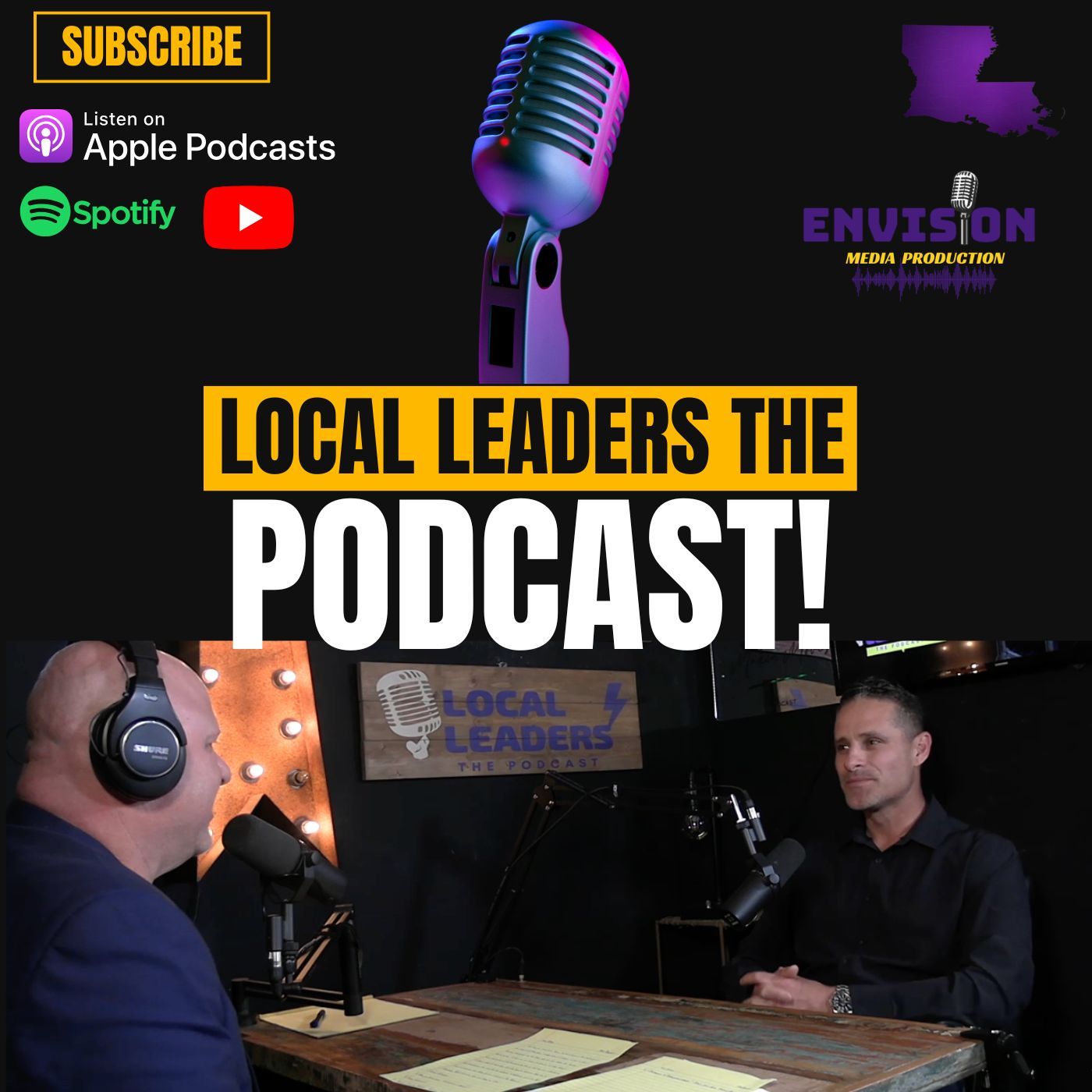
In this powerful episode, Jim Chapman sits down with Gus LeBaron — a true-blue tradesman turned empire builder — for a raw conversation about how he built his construction business from an unknown start-up to an empire. Gus opens up about his gritty early challenges, the mentors who changed his trajectory, and the hard-won lessons that took him from working IN the trenches to building his thriving business (KOS Drywall & Painting).
He breaks down his lessons learned from how to actually find balance in business, when to scale and the game-changing power of working ON your business instead of IN it. You’ll also hear his practical system for setting goals that stick, plus Jim and Gus briefly discuss the mind-blowing “butterfly effect” moments that alter lives. If you’re a business owner, tradesperson, or anyone chasing bigger dreams, this one’s loaded with actionable gold and real-life inspiration.
Timestamps:
00:00 – Introducing Gus LeBaron
06:15 – Early Life and Challenges
10:21 – Influences and Mentorship
17:27 – Entrepreneurship and Lessons Learned
23:21 – Balancing Family and Business
30:21 – Working ON Your Business (Not IN it)
39:18 – Setting Goals for Success
45:25 – The Decline of Qualified Tradesmen
55:23 – The Butterfly Effect in Life
0:00 Hi, this is Laurie Johnson with Hancock Whitney Bank, and you're listening to Local Leaders the podcast. Visit Local Leaders podcast dot com for previous episodes or for information on peering on the show.
0:41 Hey everyone, and welcome back to Local Leaders of the podcast. And I'm gonna do something a little different with today's episode. I have a local, lifelong entrepreneur here on the show. He has had quite the journey thus foreign life. So we're for sure going to discuss a little bit about several businesses that he owns and he has his hands in, especially here locally, but we're also going to discuss what he feels have been his keys to success thus forward his business and outside of his business as well. So first of all, with that, I want to welcome Gus Lebarn to Local Leaders of the podcast. So first of all, welcome to the show. Thank you, glad to be here.
1:22 No stranger to podcasting, you're you've been doing a little bit of podcasting yourself. Yes, we got started about six months ago. We got our own podcast going on on on basically mainly just trying to educate and train and influence early early entrepreneurs. Catch them early in life. Right, I'll make sure that I link your podcast to the description of my podcast, So hopefully some people will get something out of this and they'll go want to check you out. Maybe some younger people wanting to learn something before they're actually there in life and they have to figure it out, kind of playing catch up. Hopefully they'll get something out of that. Now today we're here to talk about you. You've had quite an interesting journey in life, and some of this we talked about pre recording this podcast, and some of this I'm going to be learning on the fly, which is how I preferred it with you. So let's start out.
2:18 Where are you from and born in? Where were you raised? Those sorts of things. Early life. My story begins in Mexico, wat and raised up to twelve years old. Okay, So I was born in a farm in Mexico, growing up my whole life working on the fields, working horn. Yeah, my father owned several hundred acres of farmland, planeted corn, planet afalfa for the cows, I mean things like that. So I grew up country life my whole entire life. I really love to enjoyed it. So that's pretty much where I got started. Eventually my father was traveling my daughter. My dad did a lot of traveling throughout his years, and he went through a town called ross On, New Mexico.
3:00 Yeah, sofo there you go. Yeah, that's the town, so Roswell, New Mexico. Even he was passing by there for some reason, and he came across a school called New Mexico Military Institute. It's a it's a military school that goes from high school all the way to college and sometimes. For some reason, he really liked what they had to offer there and he made it a goal to try to get most of his kids to go there. So from Mexico at a early age, once I turned twelve, I joined New Mexico Military Institute for high school. And that's kind of what brought me to the States and where. Oh wow, when you were really early in life, let's say, before the age of twelve, when you were that young, what do you remember wanting to be?
3:46 My kids asked me this question, and I get asked a lot, and the only the best answer that I can give you is this is it. When I was young, all I remember is wanting to be rich. Yeah, I had that one too. That sounded good to me at eleven, and I'm sure. Yeah, So I think that I got to see you early on as a young kid the influence of money had on people. Yeah, I knew right away as I needed to get as much of it as I possibly could. That's awesome. That was the mindset I had as a young kid twelve years old before. So yeah, very good. So you, as you said, you ended up in New Mexico and uh, you know that's pretty early on in life. What were the challenges back then for you? Was it something that you remember kind of blow your mind. I mean, I know people that have lived in this area their entire life, they've never been outside them. Yeah, they've never been north of I ten and that's twelve. You went to a whole nother country I was raised.
4:40 Yeah, I got to get born and raised in a different country, so I was. I got to be around a lot of the little the lot of the Mexican culture. Yeah, and some of the challenges is definitely trying to be able to connect with the culture, trying to be accepted by the culture. By the American culture, well, both. Both in Mexico and America. So if if people can see this, I don't necessarily look or fit the profile as a Mexican citizen. You don't have an accent that you will someone recognize. So I get that a lot. Like other people. They asked me where I'm from. They think I'm from like Europe, or they think I'm from some other part of the country. I say I'm from Mexico. They don't necessarily connected with that. It's like where really, Like, you're six foot three and uh, you know, somewhat camel skin, yeah, and so most of the people can't really make that connection. So I think that some of the challenges early on was definitely being able to connect with with not only the Mexican culture, but the American culture because I do have somewhat of an accent. So when I come to the United States, people will say, well, where are you from. I know I can hear somewhat of an accent, so I'll be like, I'm from Mexico. But then I go to Mexico and they're like, hey, Bud, like, where are you from? Green eyes, white, white skin, six foot three, You're not from here. So it's hard to fit in either or. It's always been a challenge growing up as a as a young kid.
5:51 Yeah, yeah, but you seem to have managed obviously well. Uh so from there, from New Mexico at some point ended up in Louisiana. How did that occur? Well after high school, I didn't necessarily didn't pursue college. I never went to college. Was something for a lot of financial reasons. My dad being a farmer. Farmer's struggle. It's just a tough lifestyle. So there's a lot of upstate and expensive ridiculously. So anybody that can relate to being a farmer understands ups and downs in life. So financial struggles through high school I got. I basically skipped college. So I started my entrepreneurship spirit right after high school. I started getting into construction, working with family members, started learning how to work, understanding the ins and outs of business, and I bounced from state to state. I was in Minnesota for a little while, I went to Lincoln, Nebraska, I was in Kansas City. I was bouncing all over the country, just working on myself work, learning how to work construction, how to build up you know, how to build a construction business in general. And the break that we caught was really Katrina. So two thousand and four or five, I believe when Katrina happened, Ye you, two thousand and five happened, And I remember I was at the point where like, all right, I want to start my own buiness out.
7:05 I want to start working for myself. I had my own my own tools, I had my own crews, and me and a really close relative named Mark le Baron, really good friend, one of my best friends. We decided to team up together and said, let's go to Louisiana and let's there's a lot of work. It's gonna be a lot of work over there. I called my dad, got his advice. He says, if I was in the construction business, I'd be in New Orleans right now. Yeah, so good call. Yeah. We packed up our stuff and got all our tools in it, showed up with you know, some hopes and some prayers to make it happen. Yeah. That's awesome, man. So your influences at that point, And I'll use an example of myself. I wasn't always as put together as I am now. Right when I was sixteen seventeen, I was wild. I mean I you know, I had two or three things on my mind and that was it. And being a business owner or an entrepreneur was not one of them. And I actually met a guy when I was seventeen. I was working. I've always been a worker. I was working in high school at a local retail establishment and this guy was in the military, and he was actually pretty high ranking in the military, and he was also the store manager of that store, and he carried himself pretty well. And I remember noticing that, noticing how he carried himself. He'd come in sometimes he would have he was in the National Guard and he would have drill that weekend and he'd come in just for a couple of minutes. He'd be dressed in his uniform, and I'm like, that, dude's sharp right there, and he's got his stuff together. And I would spend a lot of time talking to him, and
8:36 I really consider him one of my mentors in life. But the amazing thing about it was he didn't even realize he was. I didn't tell him, you know, wow, man, I want to be like you when I grow up. But I would just watch this guy and he seemed to have it all together, and he influenced me in a positive way because at the time I figured out, if I want to be like him, I can't do all this stupid stuff. And uh so I started watching the guy. He was an influence. Who was an influence for you early on, uh maybe around that age before maybe right before you headed to New More Orleans after Katrino. My greatest influence in my whole life has definitely been my best friend Mark.
9:17 Yeah. He was. He was a He's always been a moral compass to know when I was messing up and when I was doing right or wrong. Yeah, it was. It's something a little emotional, sure, but I get it. Father definitely struggled with my dad a lot growing up as a younger adult. There was a lot of there was a lot of trauma, I guess you could say as a younger, you know, growing up with your father not being somebody you looked up to because a lot of the things that he was doing so and so. So there was definitely some some childhood traumas that I had to get over a lot. So one of the pillars in my life had definitely been my best friend Mark.
9:57 Yeah. And that's so important I think for for someone especially when they're struggling, they don't have anybody around them that maybe can motivate, motivate them would be a good word for it. In your example, I'm sure this guy motivated you. You seemed to be the voice of reason sometimes. And it was the same for me. That guy motivated me because I knew I was going down the wrong path and this guy seemed to take make all the right choices. And so you mentioned your podcast is about almost like mentoring young people and showing them, you know, what the proper way to live a life and in most instances, and I think that's something where a lot of people lack that from. You know, these young people's perspective, their influences are not typically people that are business owners and successful entrepreneurs. Usually it's what they see on YouTube or well, I don't want to say on YouTube, because there's a lot of good shows on YouTube I watched, but music something like that. You know, Yeah, mentorship a very important thing. So you take off, you get to New Orleans and and uh, you know, great timing for sure, anytime there's a disaster, you're gonna have a need for construction, and uh, when you get there, what happens.
11:21 It was incredible, I mean, just mind boggling to be able to see the damage to the extent that it was. We showed up to New Orleans, there was boats on the trees, cars, it was. It was very sad to be able to see and witness such devastation, and at the same time we were very thankful to be there because we knew that we could help and make a difference. And amen, we were. We were in a position where we knew nothing about entrepreneurship. We didn't know how to how to incorporate a business, we didn't know how to ensure a business, we didn't know how to manage, We didn't know anything. So there was a lot of challenges up ahead. But nonetheless we had the drive, grit and the want to be able to create it. So as long as there's a will is a way. Yeah, amen, And I'll tell you what. But so important that there are people there to help people through disasters.
12:05 I can speak to that firsthand. A lot of people listening to the show Canne twenty sixteen. Right here in Denham Springs, the whole town went under water. Yeah, some three thousand residents, me being one of them. A matter of fact, where we're recording right now was underwater. My home name was underwater. Yeah, and it was the people that helped you to rebuild. That became such an important aspect of your life at that point, and we. We were able to be a part of that as well and help out people get their houses back. Yeah, twenty sixteen, So that we were fortunate to be able to help people out with that, and that was a great That was good. You know, you had to be part of you know, making people's lives better is always good. Yeah, and came back so much stronger after something like that.
12:48 So New Orleans, Katrina, you get through that, and I'm sure you've learned some you learned some lessons on the way. What are something you can reflect back on and it with that experience and say, man, we really learned, you know, I really honed my skills in an entrepreneurship for that whatever it may be. The best lessons I've learned so far from the time we showed up to now is that how important is to be able to be valuable to people? Like how the being able to have bringing able to bring value to people's lives. I think that entrepreneur spirit and being able to own your own business is all about being in the people business. Right, You're you're representing yourself to somebody else of what, how how you can make their life better? And one of the best philosophies that I've stood by since day one that I've really enjoyed and I've been able to apply to my life into my businesses always do what you say you're gonna do. Yeah, so that's something that I've learned. I've not always done that.
13:50 You know, There's been times in my business when we got started off early we told people were going to do certain things that didn't get done. The communication was lacking a lot of those a lot of those ingredients and the recipe we're missing. And as I've gotten better, I've always to this point now in my business, and I believe why we're successful now is because I follow that philosophy to its core. I do what I say what I'm gonna do, and if I don't, I let them know right away, Hey I can't, I can't do this. Yeah, you know, I need an extra day, I need an extra week, I need these extra tools. If you can follow that, that philosophy, that quote, do what you say you're gonna do, you will be successful in all things. I think you nailed it on that. It'd be hard to argue with with that philosophy. And I'll give you a quick example of the importance of something like that. Obviously, in a former life, I was someone in the construction business.
14:46 I was on the paint aspect of things, the decorating side of things, and I managed or helped manage a lot of companies, a lot of people just starting. A lot of people would come to me and say, I want to start my own paint contracting business. Maybe they've been a painter for somebody else forever, and I had been in the business so long they relied on me to kind of help them through that process. And I remember one guy in particular, speaking of Mexico. He was from Mexico, and man, he had it all. Very talented guy. And one day he calls me and he says, I got a problem. And I said, what, I need you to help me with this. I need you to call the customer. He's panicking. I said, what happened? He said, well, I quoted our price. We agreed on one coat of paint, and now she's coming back and saying we agreed on two coats. And I said, well, pull the contract and show her. This is what he says, No, contract, no contract.
15:38 I said, what do you mean, no contract? He said, mister Jim, I didn't get her to sign anything. And I said, always get him to sign. And I said, it's not that, it's it's you don't trust them or they don't trust you. It's communication. Sometimes things just get lost in translation. This woman may be just trying to get an extra code out of you, or maybe she really did misunderstand and thought it was two coats. If you don't have it in writing, you got to do the two coats. I mean, that's that's the only way you're going to satisfy her as a homeowner. And really, at the end of the day, it's on the business owner to make sure that stuff isn't writing. And he learned a hard lesson all that. But to this day I still communicate with him all the time and he tells me, I still get them contracts on and I make sure they know this is one coat or two coats.
16:32 Yea. And those are some of the things that we learned since we got your Katrina to who is trial and error of knowing what not to do is so important, right, And you learned that by making mistakes. So I'm a big firm believer that if you're not making a lot of mistakes in life, that is a mistake. Yeah, you need to be making mistakes. That's the more mistakes that you're making, it means that you're trying. The more you're trying, the more success you're going to have in life. So I'm always a big firm believer, and I tell this to my kids all the time. Make mistakes, make mistakes, learn from them, make another mistake, keep learning from and I understand that every single day you're going to keep making mistakes. Don't ever be unkind to yourself when you make a mistake. Let yourself know, Hey, I just made a mistake, and guess what, I'm going to make more tomorrow, and I'm going to make more the next day. I'm going to keep making mistakes, and guess what, I'm going to keep learning from them, and guess what I may become better because of them.
17:18 That's that's one hundred percent accurate. And look, you can't you can't run a business without trial and error and making a mistake. The important thing is you just said, is learning learning from that and not continuing to make the same mistake. One of the number one things that you said in business is communication, whether it's with your customers or your employees for that matter. And I want to shift to that for a second. And you know, one of the things with entrepreneurship is typically, especially in a business like yours, you have employees, you have people that work for you. Yes, how hard is that? How much of a struggle is it to find good piece?
18:01 It's a big struggle. My honest truth is is when we get scarred. We just got started with our business and we've been through a lot of ups and downs. However, I've very had a hard time hiring people. I always wanted to do everything myself. Yeah, you know, it's like, hey, you have your business and it me and my wife and builds us up since the ground up. My wife, I'm very blessed to have her in my life. She's been part of my team and she's been blessing in so many ways of being able to get me to where I am today. And I say this because most of the time I was like, Hey, it's just me and you, we don't need other people, right Like, it's we can be all this and the stress of having that mindset what's so overwhelming at some point I said, if we're going to scale, we're going to grow as a business, and we're going to get big to where we want to be. We have to we have to open up our doors to hiring more people. We have to grow.
18:45 And it's super scary, so scary. When I just started. I have a life coach, Becca, and I reach out to her and I'm like, I'm so out of my uh my comfort zone. I'm so uncomfortable. And one of the things I've realized is that in business you got to be comfortable with being uncomfortable. And I love that get comfortable with being uncomfortable. And when I started having that mindset, when I started getting that frame of mind, a state of mind, we started growing. We started growing, we started getting bigger contracts, we started getting more contracts, we started having Tom have more employees. And now we're to the point where I am able to have a certain level of freedom that I've never had before, you know, because I have this this philosophy that I got from a great book. It's called Who Not How, And the philosophy is, if somebody can do your job eighty five percent as good as you do it, let them do it. Don't do that. And what I found out though through this process that when I'm hiring these people to do certain tasks within my business that I don't want to do, they sometimes do it better.
19:53 I have. I have about a handful of employees in my business that I honestly cannot do their job better. There's no way. And you'll start finding that out the hard way as you want to scale your business and grow it, Like take take a leap of faith, right, Understand that people for the most part are honest. You know, you're seeing the you're watching all this negative news all the time and all these negative comments on Facebook, and overall, human beings are pretty honest and they want to help you. I mean, we want to help each other out. But if you get so caught up and listening to the news when they're reporting on ten percent of a certain you know, race or demographic or population and using that ten percent to categorize the whole entire race, you're going to be frightened. Right, You're gonna say, all right, these people are not to be trusted, and these people are dishonest, and these people are this. But you'll find out slowly but surely that people, for the most part are good and are honest. Yeah, And I found that out the hard way because I've always had the mindset trust nobody.
20:54 Everybody's looking out for themselves. Nobody will do this. And as I've been growing my business in the last ten years, and as I was hiring more and more employees, I started following this pattern that people actually overall want to do the right thing. They want to be honest, they want to do what they say they're going to do. There've been small instances where they don't, but I'm talking about two percent. Yeah, there's always an exception. They're they're very, very minor, and those people you can kind of see the red flag sense to start. You start seeing how these do certain things, You're like, all right, this guy is probably not gonna make it. But overall, I've been very pleased and happy with our team building it up to this point. We've built a great team and it's been essential to be to be in the position that we are in today's market.
21:39 It's huge, and you know, I can relate to the struggle that you were just talking about because your business is your baby, and you grew that baby. You and your wife grew that baby, and so your mindset early on is nobody. And it may be true that nobody is going to love it like you do. Nobody is gonna love it, but you know, you just said it, and probably every successful business owner I've ever sat down in that chair right there you're sitting in has said the same thing. The key to business when you have matt you know a good amount of employees is find people that are better than you at what you're not good at and hire them to do it. And as business owners, it's the biggest struggle because there is a little bit of ego with us that this is our business and we know how to do everything, and we may know the basics of everything, but certainly there's people out there that can do editing, for example, better than I can. They'd be hard to find, but they're you know. So, so that's the hard part of business for me, and something I still struggle with to this day is delegation, letting someone else have it, trusting them that they're not gonna mess my baby up, they're not gonna take it running in the ground. They may actually do a better job. Right.
23:04 You mentioned your wife and the importance of that, And I want to shift to that a little bit, and I want to talk about family. Another thing in entrepreneurship that is a struggle is finding balance. I will also be the verse to admit that I am probably out of balance, and well, not probably, I definitely am out of balance. I spend a lot of time working, and as entrepreneurs, we don't look at it as work. I'm sure you don't look at it necessarily as work. It's life. It's a lifestyle that you chose, but you need a lot of support behind you, with your family and people that understand that. And then you got to find ways to balance that keep your family happy. You have a daughter, that's let's talk about your daughter real quick. She's a sports phenom. Tell me about that.
23:52 I have two daughters, two other daughters. I have a fourteen year old and a twelve year old. My fourteen year old is a have itlay. I've been practicing with some of the Olympic athletes, Christen and Terran. I'm pretty sure some of the people have heard of them. Were one of the first girls to represent Louisiana and the Olympics for beast volleyball, the first time that's ever happened. They were recognized by the governor at some point, so my daughter gets to it's very fortunate and very blessed to be able to train with them. I have a younger twelve year old that plays golf. We just got back from the Sam Burns and Streetport tournament. They did really well. They crushed it all over and got to spend some time with Sam Burns, which if nobody knows who Sam Burns is, he's a professional golfer, the representative the United States and the Ryder Cup against Europe even though we lost, but he still gave him a fight and it was really great. But to answer your question about being able to stay in balance with family and your children, I have always had the mindset of give things the time they deserve. So if I'm in the office, I am trying to stay as much focused on the office as possibly can. I don't try to focus on my kids while I'm at the office. I don't try to focus on my family. I'm giving my employees and my business the time that it deserves while I'm there, and when I'm home, I do the same thing for my family. I try to stay, you know, give my family the time that they deserve. When I'm at it, and I try to keep the office away. Somebody calls, I'll say, hey, I'm busy right now, send a text or an email. I'll get back to you tomorrow. And I try to schedule my time where most of most of my tasks are in the morning early when I'm in the office, so that I can get most of
25:24 it done. And something falls through after lunch, it'll be minor, but I'm still able to really have my energy and my focus within my family. And I'm going to say it's perfect, because I still struggle with it. Every entrepreneur is going to have a very hard time keeping them one hundred percent distance from each other because anybody this entrepreneurs has a very proactive mind. I mean they're always trying to find solutions. They're trying to find solutions of problems that haven't even happened yet. Every entrepreneur struggles with that, and that's why some most entrepreneurs have struggled to have a hard time sleeping at night. You know, they have to be taken there on medication or some kind of some kind of pills because they can't stop that mind. Because you're depending on you, You're depending on you. Yeah, you're not depending on it. You're an employee, You go to work and you're getting your check. And if you're an entrepreneur and you're not making those sales and you're not turning over those products or those services, uh, you're you're gonna go bankrupt.
26:17 Right. So that's that's a lot of pressure. That's a that's a lot of it's a big, a big boulder on your shoulders. And I think it's very important if in life you really have to prioritize and separate those that's so important. Otherwise you're you're gonna get burnt out real quick. In this business, You're gonna you're not gonna last. That's right. That's right. Burnout is a real thing. It very very much really is. Even when you love what you're doing. Yeah, no matter what it is, you're gonna get you're gonna find ways how to You're always gonna try to find ways how to do more, and you have to stop yourself. You have to say, all right, what am I really doing all this for? It's for my family. So if I'm not taking the advantage of being entrepreneur and being able to spend time with my family, then why don't I just get to get a nine to five. I mean, like right at that point, like. Yeah, let let someone else have all the pressure.
26:59 Hey. The reason that one of the greatest, the greatest things that's come out of being an entrepreneur is that you get to control your time. You know, and I really recommend anybody this entrepreneur is that try to figure out how to scale, scale your business bigger. If you're instilling that small mindset where I'm doing everything and nobody else can do it, you're losing out on a lot of freedom, a lot of finances, you know, being able to have better opportunities to make more money. But when I find out that when we started scaling and I started hiring more people to do a lot of the things that I didn't want to do, I started finding out that I started having more and more freedom, you know if now, which is nice, right, that's what that's a whole Yeah. So you don't want to own you don't want to own a job. Essentially is what you do is you're owning a job by you doing everything.
27:43 You want to own a business, right, You want to be able to be able to dictate what hours you want to work with hours you don't want to work, if you even want to work. That's really the true spirit of owning a corporation or owning a business. Most people own a job and they don't know the difference. That's the biggest problem. How did you come to that realization when. If you're not able to leave your business for more than a month, you own a job. That's a really is if you don't have the structures in place that you are able to walk away from your office and not come back from a month, you own a job because that business cann't survive without you. So you're part of the structure of that business, and by you being a part of it, it can't survive without you. If it can't survive without you, then you have to be a part of it, meaning that you are obligated to be there. That means that you own a job. You're an employee. And the true, the true spirit of being an entrepreneur owning a real business is being able to have a business that's bringing some of that mailbox money that you have. Know you have zero tasks to do with it. You mean, people just don't understand that. Everybody.
28:47 People pass I think that most people own a job they don't own a business. And what I found out by you scaling hiring people to do the things that you don't want to do, and eventually you just get left with the things you do want to do, like easy stuff, I mean things that you can manage from out of state. You can go on to go to education in Paris and be able to answer a few phone calls and make some transfers, you know, minor stuff, but you're still You're away. You don't have to be there. It doesn't need you to survive. And most people will never understand that until they do it. Yeah, And I think the fear with a lot of business owners, there's a fear there of hiring people that may not that may actually be a detriment to your business, right, they may be those sort of headaches that you got to deal with. But there's also a fear of now I've got to pay this person. Now I've got extra, even more responsibility, you know, if if if something happens to me, you know, I'm not driving. In business, I'm not hurting someone else's livelihood. We hire employees, now you've got a whole nother responsibility there because you want to pay them, right, they they've got to get paid. Those jobs you are picking up. Now you're splitting it income in a way. You're not splitting it, but you're they're taking a certain percentage of your profit away from you.
30:07 That's one out the. Way I look at it. Anytime that I hire employee, I look at it like I'm replicating myself, Like I'm making a copy of myself, and they're they're assigned to a certain task of the business. It's essential. So you want to just be hiring people just to hire people, they have to have something for them to do. Sure, So I just look at it like I'm just replicating myself. So and the more I can replicate myself, more I can copy myself and paste, the more money I'm to make, because hey, I'm good at making money, like I do well. Right, So if you had, you know, another one of you, you could be making two podcasts at a time, right, three podcasts shows at a time, four podcasts, five podcasts. So I look at it the same way. I'm just copying myself. So if I'm able to get one contract now and I hire more people now, I'm able to get two contracts now, three contracts now, we can do twenty contracts a year because I just replicated myself over and over again. So I don't know if that makes sense.
30:53 Yeah it does, It actually does. And I you know, sometimes as business owners, at least in my case, I don't practice what I preach sometimes and I know the right thing to do. But you know, there's ebbs and flows in business, and very fortunate with my business that I've got more than I can handle. But that's also a problem because I have more than I can handle, right, So my option there is to either send business down the road or hire people to handle it. And so I get what you're saying, and one hundred percent agree with what you're saying, and of course I'll use me as an example. I know that the more people I hire, the more money I'm gonna make because I know that my business plan is solid and there's a there's a need for it, right, And it's great advice. It's probably the hardest lesson that business owners will learn is when to scale, because there's timing there. You can actually grow yourself out of business if you're not careful. I've seen people grow too fast and they end up sacked with a bunch of debt and then then uh, business something happens and you know, business maybe drops a little bit.
32:06 You're gonna know though, You're gonna know right away, Like we never hire anybody unless there's a need. And as soon as the way that I know that there's a time to hire somebody else is when one of my employees is overwhelmed, like they're frustrated, like, hey, I don't have enough time to get all this done. I'm like, all right, we need to hire somebody else or even myself if I'm overwhelmed. Right, So, if I'm overwhelmed, like I have a freaking one hundred task in my desk, I can't get them all done there, all right, there have to we have to hire somebody else, Like there's no way that I'm gonna be able to handle all this. And that's how you know when you have to hire somebody else. But I'll never hire somebody else unless there's the work there for them. But as long as the task is there, you need to be charging for it, right, Sure, you have to because that's where the income is coming from. If you're being overworked and you go bankrupt, it's because you never bid the project, correct, You never bid. You never out of the right profit margins to your service, to your product. So this all there, it's all categorizing your budget and you just need to make sure that there's enough hours in there for it. And if somebody's having one person's having to do way too many hours on a certain task, then you have to hire somebody else.
33:06 And that's really where it comes down. Then that's how you're gonna know when to hire somebody else. As I was building my business, I would start seeing some of my team members really overwhelmed, really stressed out, and I said, all right, we have to hire somebody else. And if it goes done to the point where our profit margin starts going down, then we got to charge more because this is what it takes to get this job done. And if we're having these struggles, so is my competition. There's no way around it. And comes to my competition is not having this problem is meaning they're gonna burn They're gonna get burned out, and they're gonna be out of business within a year or two anyways, because there was only so long they're gonna be able to do this for. So it all kind of falls into place at one point. But It takes confidence. It takes confidence and belief in yourself to be able to do it, because I know that I struggled with it. I had there was a lot of therapy sessions with my life coach.
33:48 I don't know it's gonna happen. I'm gonna go bankrupt because I had that same mentality that you're saying, my overhead's gonna get too big. Too much overhead is never good. However, what I found out though, as I hired more people and more employees, I also found the work for them to be able to fill in those gaps as we went growing. And it's just growing and growing and growing. And that's just a pattern that happened to follow and say you have to be at a hustle out there and filling their time work to make sure you keep them busy. Yeah, so wow, it fell into place pretty good. Your podcast, in particular, you cover a lot on books and and uh motivation, I guess you could say motivational business uh related books. Give me a couple of books and you've already named one, but give me give me a couple of more books that that you would say were kind of key. Because I'm also like that I read.
34:36 I take in a lot of literature on uh. I call it self help, you know, just just food for the mind man. And and uh, I've always been a curious person, which makes sense with what I do for a living. Uh. What are some books you would say that's helped you along the way? The best book that I can recommend anybody listening to this podcast is is if you're an entrepreneur and you're a true entrepreneur and you want to either you're starting an entrepreneurship or you're an entrepreneur, you never read this book. And most I would say most people have is the book called How to Win Friends and Influence People. That is that has got to be the same extent your second Bible. I mean quite, it's been around so long, it's it's timeless, the lessons.
35:19 It's an art piece. So anybody that has not read that book, I highly recommend that you read it. But I only read it once, but read it twice. I've read it about six times in my lifetime. And I and sometimes you got to keep rewritten it because a lot of life lessons you got to relearn. So that's when a really good book. So How to Win friends that influence people has been really key essential to be able to learn how to interact with people, how to socialize with people, how to do well in sells all the above. There's another great book that I've read recently, so through the struggles of entrepreneurship. Everybody deals with anxiety, overthinking, stress, all the above. Right, there's just so much goes in Choppers Show and so many unknowns coming to you that it's hard to deal with them. There's a really great book and I'm sorry but I forget the name of the author, but the book is called Don't Believe Everything that you think. That book was so good to deal with with the anxieties of life. And it's short book, two hours long, I mean, but it's pure gold.
36:14 I haven't read it. You really got to read that one. I've read it. I probably read that one ten times because it's so short, it's only two hours and being it is so short, but the material is so powerful and it's just really essentially the premise of the book really just says that all your life struggles and pain comes from from your thoughts. But his years just really got to read it and it's been such an impact in my life. Whenever the wills are just coming off where I'm just overthinking, I'm going my mind's going one hundred miles an hour, I go back to that reference and I really think about where this is coming from. It's just coming from my overthinking. It's really it, you know, and he just it gives you life's lessons of how to stop it, how to put the brakes on it, how to take a deep breath and just reset yourself.
36:58 Wow, look forward to reading it. I'll definitely get that one. And I'll link the books that we talk about in the podcast description, So if anyone's driving right now and when you get home, click the link if you'd like to check it out. I'll throw a couple in there that have really inspired me. And I've been a reader my entire life. I can remember at twelve years and reader of those types of books, motivational types of books. The first book that really had an impact on me was called See You at the Top. It was by a guy named zig Ziggler, who is one of the most amazing salespeople in history. He was from Mississippi and had that Mississippi accent, and this guy would sell out Colisseum's talking about you know, just what you and I are talking about today, Not so much entrepreneurship, but how to sell yourself to other people, which plays a big part in an entrepreneurship. And so shout out and zig Ziggler.
38:01 He's passed away now, but I'll shout out his company which is still around. But see you at the top was one, and then recently I read one by Patrick Bett David. It was called Your Next Five Moves, a great book on planning out your business strategy in advance. Too many people and I want to get your opinion and your thoughts on this. As a successful business owner, I find a lot of business owners fly off the cuff. So they know their business. Maybe they're maybe they're a painting company, and every day they have people that they're doing jobs for. They in this company, maybe they got four or five guys working for them, and it seems like they're always busy. But if you stopped them and you said how much money are you making at the end of the month, they couldn't tell you. They have no idea. They know what they make jobs a job, right, and so they're flying by the seat of their pants.
38:59 There's no planning to where are we going to be in a year, where we're going to be in two years. So that's a good book to really form your business strategy five steps ahead, which is kind of how he believes that you should form your business strategy. You should always be proactive and not reactive. And what are your thoughts on that. I am a big believer in something pretty much goals, So I look at it like you're he's talking about, is building a set of goals for yourself or your business, for your family. So one thing that I do religiously every single New Year's with my families, we sit down and we write down ten goals that we want to have for the years. So I write down not only the goals for myself, but for my business, for my family, for my kids, and we all sit down and we write ten goals. And I would love the audience to really do this in life because the goals really what it are. Is there a GPS navigation system to where you want to be at in the next five, ten years, or at the end of the year. So I have five year goals, I have ten year goals, I have one year goals.
39:58 I have quarter goals. So UH, to me, those are the next five moves, right like where we go and what are we trying to accomplish and what are we doing? And anybody that's successful in life has implemented some kind of system where they're they're uh instilling these these principles goal setting, and that's been a major change in my life. It's something I started doing in the last ten years. And I would say that this would have been one of the greatest impacts in my life, just being able to know where you're going, where you want to be at. Yeah, it's huge. I'll tell you. You know. One thing that you said that just stuck out to me was goals in your personal life and your business life. So if you sit people down and you say, hey, man, what are your what are your goals from the next year.
40:46 Most I don't know if i'd say most, but probably half of your your entrepreneurs, your business owners are going to list out four or five business goals, nothing personal. It's important to have both, right, It's important to say, hey, I want to be a you know, a better husband this year. I want to maybe I want to do a date night. I want to set a gold to do a date. Those are some of my goals. I have my wife three times a month, you know, things like that. Exactly, and that's so important. But I'll be the first to admit, Uh, most business owners they don't. They don't put the importance on that personal stuff. And if your personal life ain't right, your business life ain't going to be right.
41:26 So I have them right here. I keep them. They're my second bible. I have my goals right there. These are my goals for the year, and I keep them. I see them every single morning, and they're they're my compass. All right, what are we doing today? Well? What direction are we going in? And and I feel like the people that don't have these in their life, they're lost. They're not They're they're wandering and they're trying, they're trying to figure out what they're going to do, and they don't have. If you don't if you don't plan, plan to fail. Yeah, really simple, Hey make a plan or plan to fail. I love it. And it's true, very true, it's true. And and uh, you know, one of the things I've done is actually for the last twenty five years, I've had this clipboard. I've had it from way before I had a podcast, when I was still working for somebody else, and I would carry this clipboard around and every night I would sit down about I want to six thirty or so, maybe after eating dinner, and I would write out everything I was going to do the next day.
42:22 And it would be ten or twelve things, and a lot, you know, in my life, a lot of it with sales calls or whatever, or go see this customer, take this guy to lunch. And as I would do them, I would cross them off the next day. I may I may only end up crossing off six of those things. The next four would go to the next day, so I would prioritize those to where by the end of the week I was knocking out those daily goals. But I'm like you, I also had quarterly goals and it wasn't just sales related. Maybe I want to lose ten pounds, you know. It's things like that. Health. How important is health to a business center? Health is wealth? Yeah? Health is wealth. There you get man, We got some phrases on this one. People are learning some.
43:06 Stuff today that a rich man has many many dreams, right, that has many wants. I guess you can say a sick person only has one. Yeah, And that is to feel better. That's it. Wow, true and deep. I mean when you really think about that and you really get down to the nuts and bolts of it, that's a deep statement and it's very true. And if if your health side of whack, if your personal life side of whack, good luck getting your business life in line. I've never seen a business owner that had haywire behind the scenes, if you will, everything outside of his business was haywire, meaning his personal life or his health and his business be on point.
43:51 Never seen that because usually one thing controls the rest. You know, you got you got to learn and I'm not preaching to people here, but you said it. You got to learn to leave your business stuff at work and don't bring it home. And sometimes that's hard, you know, I would, especially if you've had a really tough day in business. But so important, very very very important being able to separate the both and just really understanding that as you're building your guys a business, right, anybody that's listening, that there's gonna be times where your life is out of balance. Right, you're prioritizing work a little bit more than your family, or you're prioritizing your family even less. Than your work and you're struggling financially or vice versa, or you're prioritizing your work more than your health and things you suffer.
44:36 But what was really important is the awareness behind it, understanding and having the conversation even with your family, like look at babe, look at my kids, or you have a meeting, we were struggling financially. We're gonna have to make some sacrifices. Dad's gonna have to work a little harder this year to get us ahead in life. But being able to recognize it and make sure that your family's behind you and they understand what you're trying to do, so that awareness is there, and then once you meet those goals, those financial goals, you can kind of come back to balance again or the same thing. Hey, all right, I really sacrifice my health because I needed to get ahead. All right, I'm going to really take it easy with my business. Have a meeting with your team and your office saying, look at guys, I really need to take a little time for myself. I'm going to be taken off work a little early, getting off because I need to go to the gym. I need to go work out, I need to prioritize my health. But the awareness and the communication between your family, your team members at work, and even with yourself that you're recognizing it. A lot of the people do this unconsciously, right They don't even know they only have a plan again behind it. So they're spiling out of control and they have no idea what's happening with their life. They don't know why. You know, they have high cholesterol, type two diabetes, their wife is leaving them, their business is going under is because they don't They've never really had the awareness behind it and being able to understand it. If they're going to be out of balance, at least be aware of it understanding Hey, I know that I'm neglecting my family right now, but it's for a purpose and there's a plan behind it, and my family's aware of it and they're behind me and they're supporting me.
45:56 Yeah. You have to be able to look yourself in the mirror and beyond us with yourself, and hard hard for people, most business owners, and I think it's an important for a business owner to have confidence. Ego is not always a bad thing. It's a bad thing when it's out of control, but ego is important in business, I find because I think that ego drives how other people perceive you. And if someone if you're someone that doesn't have a whole lot of self confidence, that's going to stand out and people it's hard to get people to do business with someone that lacks self confidence a lot of times. And so you've got to be able to look yourself in the mirror sometimes and let go of that ego and say, hey, this is why this is failing. You know, I'm not spending enough time here or there. And there will be times in business, as you said, where maybe you do need to dedicate a little more time to your business. You know, things change one thing about any type of business. I don't care what business you're in. It's constantly changing. Things are coming out.
47:08 There's uh, you know, especially in the construction business, what was popular yesterday may not be popular today. You know. I remember when foat finishes were all of the thing, and people were spraying drywall mud all over there, all over their sheet rock, and and that was a bit beautiful decorative technique that not many people knew how to do. But it's gone away from that. So as a business, that's something if if you're good at that you're gonna have to change along with it. And you know, uh, the best, the best thing that people can do when it comes to the topic that you're talking about as far as balancing when things do file apart and aren't going your way and things you're missing your quotas and you.
47:50 You're having struggles in life. The best mindset that I've been able to really apply to my life that's been the most helpful is going to this to this quote, it's your fault. Yeah, you know, if I if I take responsibility whether it's my fault or not, I don't even care if you know, if I lose that contract, if my wife leaves me, if my kid, you know, is struggling, or if I'm you know, not winning in life in sun Gieral. If I tell myself it's your fault, immediately in my mindset goes like, all right, if it's my fault, that means I can do something about it. That means I didn't do something that I can possibly do now to change the outcome. And most people these days, they have a mindset of it's not my fault, it's his fault, and it's that person's fault and it's the weather's fault and it's world's fault or whatever they want to blame, and instantly they become victims and powerless to the situation. So I believe that anybody listening to this, if you can apply that to your life, just anything that happens in your life, whether it's your fault or not, whether it's your kid failing school or your kids getting into drugs or whatever it is, just tell yourself, this is my fault, you know. And as soon as you tell yourself that, and you really truly say it to yourself and believe it, you're instantly your mindset's going to go, well, if it's my fault, then I can do something about it.
48:58 And if I can do something about it, I can change the outcome. And if I can change the outcome, I can stop this. Yeah, Jocko will It write a book called Extreme Ownership, and it's very similar to what you're saying, where you have to take extreme ownership of your business, of your life and you have to own the victory's and the mistakes. Yes, that is good too. So one thing is important is that, Yes, when you're sitting in that JACUZI at that five star resort, and you look around and you see your kids playing around, or you with your girlfriend or whatever. His life is treating you to look around and say, this is my fault. Do that as well. Don't just do the negative stuff, do the positive as well. I love that and I do do that as well. I look around and I wake up in the morning and I see my baby boy in the bed, and I see my wife, and I see my house, and I tell myself, Hey, this is your fault. You did this.
49:47 Yeah, that's right. Let's talk about your business quickly. You're you're in Denham Springs, KOs Drop Wall. Ks draw On Painting. Yes, you're right here. Our office is right here Peete Highway, right behind the walmart. Uh, and y'all do primarily drawwall and painting and or all of the above. We do all the division nine of the plans, so we do everything from metal stuff, framing to send spender ceilings, act ceilings, drawwall. Painting, commercial, residential. We do some commercial, we do some residential, so we do a little bit of both. We do some multi family things like that. So that's pretty much what most of our business does. If anybody, if any if anybody needs a draw over, Paara, Please don't call us.
50:30 You get a hole in the wall. Get every year, every year during Christmas time, we get phone calls. Yeah, we're up in the attic Christmas tree and my husband step in the ceiling. I'm like, I'm sorry, but we don't really kind of do that too much. But we normally we tackle most of the larger projects around the country, do a lot of the you know, the housing shortage, so there's a lot of apartment buildings going up, and we we tackle a lot of those bigger projects. And we recently just opened also electrical company, so that's something we can help you out. If you're a new home in the area and you need an electrical quote, please give us a call. So that's something we're excited about. We just teamed up with Kent Tech Electric with Steve Saloom. He's uh, we've got him on the team and we've been working together now. So any electrical needs, residential commercial, Uh, We're we're happy to help you guys out with that.
51:17 Yeah, and and uh and so on that electrical side, I want to talk about that for a second. So if it's new construction, do you deal with the electrical on that end too, or is it just existing homes or maybe they need a panel switch out. Or we mostly just we may just doing the new construction, many the new construction and commercial anything new new construction, commercial, small retail, anything to do with new construction. The smaller stuff we don't really mess with too much unless unless it's it's a it's a favor something for one of our customers, will do it, but we're we're prioritizing mainly new new builds. I got a lot of builders listen to this show, a lot of big builders too, So y'all give him, y'all give give that company a shout, and if you send me the link, I'll link that in the description as well. Make it easy. Yeah, exactly. One more thing before we get in out of here that I want to talk about specifically, and it's kind of going to be a circle back, but it's important. Look, one thing that I have stood on a pulpit about, if you will, is the importance of trades today. And I speak from a lot of experience because I believe that a good electrician, or a good drywall guy, or a good painter or a good framer, those in and of its core are talents. Okay.
52:42 I have seen, probably in the last ten years, a shift to where where you used to have and I'll use painters because that's what I dealt with. Where you used to have these old school painters that were just man, it was art to them and they were just great. There has been a shift to a quality reduction in some cases with some of those industries, and I think a lot of that there is such a push towards college that the trades have suffered because of it. Look, there's some people out there. If you're going to be a hard doctor, go to college, get your medical degree and heart surgery. I don't want anyone to operating on my heart that doesn't have a college degree or a medical degree. There is a serious lack in the trade field of qualified people in trades, and I think some of that has caused because parents push college to people that they may just not be made for college for whatever reason, has nothing to do with brain power. They may just not like school too much. And maybe they're a talented framer or maybe they're a talented painter. And these are where your entrepreneurs are being born. You know, if you're gonna if you're gonna go. We're up telling a construction company. I mean, I guess you could graduate in construction management and take that route, or you could be someone like in your case, rather than go to the college route. You kind of learned from the ground
54:14 up on what this business was, and then you ram with it and you built an amazing company based off of that. How do you feel about that. Quote that curts my mind when you're saying this is a quote that people have probably heard a thousand times that says that strong men create good times, and good times create weak men, and weak men create hard times and the cycle goes right, So I feel that, you know, our hard times create or hard times creates strong men. Yeah, and it kind of just cycle kind of games going. So right now we're in the phase where we've created a lot of weaker men, I guess you can say in a sense, and the fact that we've had amazing times, We've had some great times, you know, things we have not struggled. And I say, for myself, growing up in Mexico, I've really been able to see the actual the face of growing up lacking in life, Lacking you know, just good set of clothes, good set of shoes, you know, food in the fridge, a nice bed to be able to sleep on. So I feel that a lot of the younger generations have grown up with having so much it's made them weak in a lot of sense. And now they're seeing you're having to also you throw in their things like social media, where they see these kids, you know, making millions of dollars just making YouTube posts or drop shipping on Amazon or things. So the incentive is not there, right, Like do they really want to go sweat out in the sun and build a house and framing when they're seeing their buddy, you know, making
55:45 hundreds of thousands of dollars, go even gaming. So we're creating a generation of definitely weaker men, you know, we need to definitely. One of the advantages that I had as a younger adult my dad always did for me is during the summers and summer after school, I would go work in construction with my with my uncles or my brothers, and I was out there hustling. So I got to learn a trade at a younger age that was able to apply later on my life to build a multimillion dollar business debt free, no doubt, right, So I think that if you as a parent and you do have a younger kid, send them with their uncles to go frame, send them to go you know, roof, do electrical work, hvac work. Have them instill how to have that trade in case they ever needed one. Later they had a weld, you know, things like that, and having doing in their summer and their time off, you know.
56:31 And that's what my dad did for me. I would either I was either working on the farm or I was either working in construction in the United States during my summers. And when I became an adult, I was able to use those skill sets to be able to build a multimillion dollar company and I loved it. It was something that was really good for me. And I don't feel that we're doing that for the younger, younger generation. I feel that it might it might come and bite us. Yeah, I agree. I agree with that one hundred percent. And you know, work ethic is nothing to be taken lightly in the entrepreneurship field. When you first start, you're gonna have to work, You're gonna have to build it, and the sharks are gonna be out there and they're gonna be biting at you. And you've got to be able to weather that storm. And a lot of that work ethic is built when you're eight years old, nine years old, ten years old. Look, I can tell you I was never given anything in life. I can remember when I was twelve and I wanted to go to a movie with my friends. My dad would expect me to cut the grass or other things you know, around the around the house to give me two bucks to go to a movie. I'm old. It was cheap back then, but it built something in me. And let me tell you one thing, I ain't afraid to work. I ain't afraid to work. And I credit my work ethic with about fifty percent of any success that I've had because I've always been one to say, you know, you may be smaller than me, maybe better looking, the mean, but
58:01 you ain't gonna outword me. It ain't gonna happen. Yeah, And and it's been a blessing. I was blessed with that. But I agree with you that I think, uh, some of the younger generation just haven't experienced that. They it's fell off. So it's up to us as an older generation maybe to mentor those those kids. One thing I will credit livings to parish in Louisiana, for is. Some of our schools now have trade programs high schools. I know Walker High School has a phenomenal welding program. You brought up welding. They have that there. So what do you think, Man? Any any final thoughts, anything else you want to say before we get out of here.
58:43 No, I just want to really thank you for having me on the show. Man. I enjoyed it. We could talk for four hours. I really want to just finish off with the you know, just anybody that's listening. If you guys need any help with you you guys electrical or dry well work? Definitely, Yeah, I got I'm very fortunate to be part of this company now and being able to build it up as I was. I I remember early on when we wanted to name the company. I remember, oh, I did want to talk about it. I'm glad you brought that up. I was thinking about, you know, a name for it. And the company is named KOs and everybody always asking me what is what does KOs stand for? And I always I kind of lie a little bit. I'm like, it's like Kings of she Rock. But but the truth of the matter is that the name came the name actually in Spanish is spelled chaos, So there's an a, there's an a head and in the symbol. And the reason why I wanted to name it chaos, it comes from a good h scientist. His name was Edward Lorenz.
59:41 Edward Lorenz was a weatherman and he was trying to predict weather patterns. This is, you know, several like a hundred years ago or so when he was doing this, so he was calculating his formats in his in his computer, in his in his uh, his algorithm. He was trying to figure out how to predict it. And he found out as he was trying to predict the weather, as the weather was making these small, tiny little changes, he had to adjust his formula. And every time he adjusts the formula, it caused the whole pattern to change. And as his pattern was developing on his computer, he started seeing it. It started creating a pattern and it ended up looking like a butterfly. And that's where you get the movie of the butterfly effect. So, and the butterfly effect says that the flaps of the flaps of a butterfly in Africa will cause a storm in South America and The whole premise of the whole theory is that small little changes make big impacts. And it's something that I applied to my life, into my business, my personal life, and everything that I do is always try to make small little changes that make you better every single day, create a better version of yourself by the small little things.
1:00:51 Small hinges move big doors. So that's where the name comes from. Yeah, water computers rock. If it just drops on it and drops on it every time, it will actually pierced rock. And you know, when you think about it, you brought up the butterfly effect just quickly. Something that and I try not to think about this y'all too often because it absolutely blows my mind. But if you ever looked back at your life and you think, Wow, if I wouldn't have zigged instead of zagged, this would have never happened. If I wouldn't have met this person, it wouldn't led to this, which led to this, which led to where I'm at now. Those sort of things. It sometimes the smallest interactions are the smallest experiences. You can literally trace back your life to that and say, if this wouldn't happen, I wouldn't be here. Isn't that crazy. I don't even like thinking about it sometimes and I'm like, man, it just blows my mind. But it's life is is, you know, It's a blessing. And it's also something that I don't think people take a lot of time to look back and really look at what led them to wherever they are.
1:02:02 But there's so many little things that just lead you. You just got to be open to accepting that. So I think that some people got some stuff out of what we talked about today, I hope. So I'm gonna link everything we talked about in the description, but I do want to say this is why local leaders of podcasts regardless of all the other things that I do. And I've been very blessed that this business grew wings and I was able to branch off and do other aspects of media. But this will always be my baby. And why because I get to sit down talk to people like Gus who I learned from, and you're never too good in business, or too experienced in business, or too old for that matter, to learn and so I appreciate you coming on and I got something out of today.
1:02:58 So I'm hiring fifteen people when I love it so I appreciate you coming on. We'll link everything in the description. Everyone to come back, just let me know and look, if y'all enjoyed this comment in the description and go follow Gus's podcast and we'll put that in the description as well. And they're talking about all kinds of good stuff every week on that show. So thank you so much for coming on, and until next time, reminding all of you to love your community, support local business, and keep leading. Thank you very much,