
Taking Flight: Delia Taylor on Louisiana’s First New Airport in Nearly 40 Years


 Apple Podcasts

 Castro

 RSS Feed
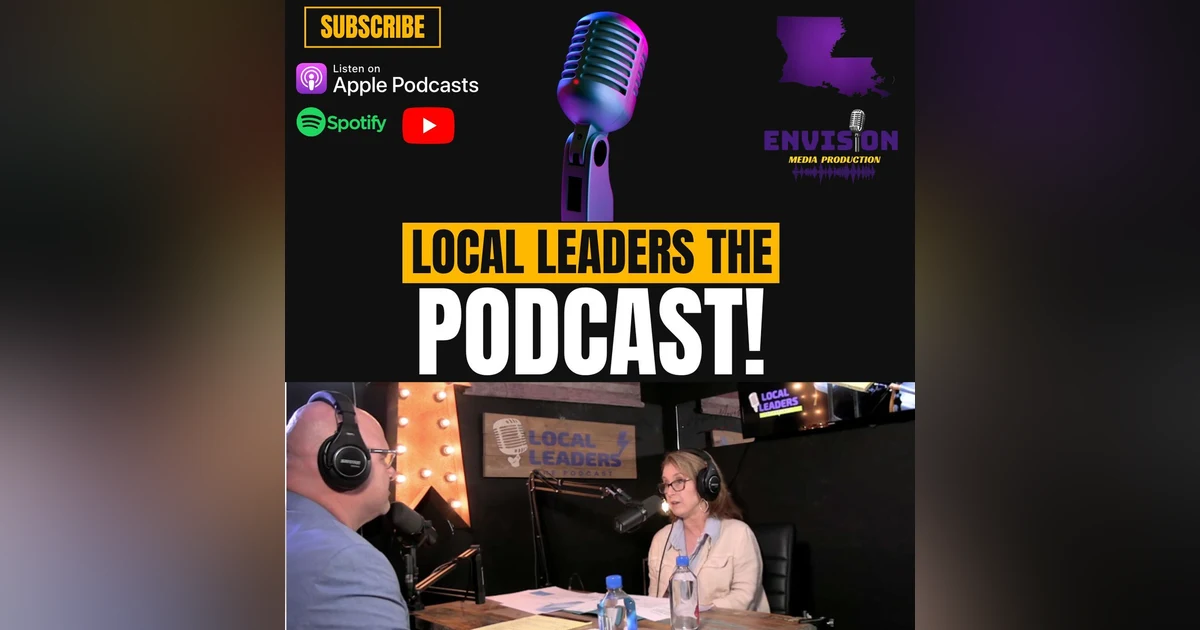
In this episode, Jim Chapman sits down with Delia Taylor, Chairwoman of the Livingston Parish Airport District, for an in-depth look at the Livingston Executive Airport — Louisiana’s first new airfield in nearly 40 years. Delia walks us through the current construction progress, the state-of-the-art 4,200-foot runway and supporting facilities designed for corporate jets, private pilots, and emergency services, and how the airport will connect Livingston Parish to the rest of the region and beyond.
Delia also addresses community questions, the development timeline, and the long-term vision for turning this infrastructure project into an economic engine for years to come. Whether you’re a business owner, aviation enthusiast, local resident, or simply curious about growth in Livingston Parish, this conversation delivers the inside scoop on one of the most significant infrastructure developments happening in Louisiana right now. Tune in for this optimistic, forward-looking discussion about progress, opportunity, and the future taking flight in our own backyard.
You can learn more about Livingston Executive Airport by visiting:
https://goflylea.com
Timestamps:
01:33 Airport Construction Updates
04:00 Federal Application for FAA System
07:42 Economic Impact of the Airport
14:36 The History of Livingston Airport
17:25 Location Matters for Economic Growth
21:39 Potential for Future Events
25:20 Innovations in Delivery Services
26:15 Infrastructure Improvements from the Airport
28:55 Future Plans for the Airport Project
33:07 Community Support and Vision for the Future
\
0:27 Hey everyone, and welcome back to local leaders of the podcast. And today we have a returning guest to the show. And it's interesting, y'all. I went back and looked it was two years ago today that me and Miss Delia Taylor sat down and did a podcast about the Livingston Parish Executive Airport. So you're gonna catch us up today. You're gonna give us all the current details and progress on this project. And first, before we get into it, I want to welcome you to the show. Well, Jim, thank you so glad to be back. And that's kind of cool that it's two years to the day. Blew my mind. We did not plan that, y'all now, not at all.
1:07 But boy, we've done a lot in the last two years. So again, thank you for bringing me on, for the chance to let the public know where we are and what all we've been doing for the last two years and obviously what's ahead in the future. Absolutely, and uh, the last time we talked, I think it was just a groundbreaking ceremony that you had just completed and since then you've had some some movement. So let's get into it. Well, that's right, So you know, over this time I guess it was two years ago that we had a groundbreaking for the site UH that allowed us to begin doing basic construction, basically clearing the land, UH, doing a drainage type work, mobilizing dirt, building building basically the foundation for the assets that we want to do there. And we've done a lot. In fact, I think we had told you we have two hundred and forty two acres that are there. We've done environmental assessments, We've looked at our airspace that's recognized by the state, by the Federal Aviation Administration as well. We've held public meetings, we have the full engineering design. We've now cleared the land and done all of that prep. So that's what we've been doing today. If you could see the site, and you're really not going to be able to drive up on it unless our construction grade road is open, but if you flew over it from a bird's eye view, you would be able to see what is basically a foundation
2:38 for the forty two hundred foot runway. We've put turnarounds at the ends of those runways. The plane when they land can obviously turn around. There'll be a taxiway then that goes from the runway connecting to a very small airport that will sit on the east. So where are we today, That's what's been done today and where we're going to go tomorrow. Right. We felt like there should have been fireworks back in February at our little small airport board meeting because we actually approved and let out the contracts to actually begin construction on the runway to actually begin laying asphalt, so it will begin to look exactly what we envision.
3:23 Yes, and that's a big deal. I mean it's a huge deal. Yeah. So we're expecting construction crews to be on site by the middle of May, is what we're hoping. Actually, they're waiting on some conduit to come in that's being affected a little bit by the tariffs from what I understand, but that'll allow us when we get ready to put in electrical and the lights that will go around the runway. Obviously we want all of that laid down into the ground before we start pouring the sub base and the asphalt. But we anticipate those construction crews to be on site this next month and and to do that. I want to also share with you, Jim that not only are we getting ready for construction. But another key point, or a key aspect of our growth and development is doing a federal application that we need to do to be in the FAA system. Right now, we will open as a state airport, state mandated, state funded, state operated airport, but we also want to be in the federal system and we have to actually apply for that, and so we have begun that application process. There's a lot of planning work, analytical work that has to be done, and so we've done kind of, if you will, chapter one of that application. And what that is that chapter one is the forecast and so let me just share with
4:54 you why that's important. FAA wants to know. Okay, if you're going to be an airport, we want to know do do you have all the makings to be a successful airport? Can you make it? Can you sustain yourself? Is this something that is going to benefit your community and the aviation community overall. And so the very first part of that is a forecast study and we have completed that and this is a great news, and not just for our airport, but great news for Livingston overall. There were three things in particular that they looked at. Population are we are growing area or are we losing people? I think we all know the answer to that one.
5:34 We're definitely growing and have been for the last thirty years. And by no surprise, the study came back and said none on are you're growing, but you're outgrowing the average growth rate in Louisiana by far and even across South Louisiana by far. So check that box right. Then the next one was employment. Are your people working those who live in your area are they do they have meaningful employment? And the study came back and said, yes, not only does Livingson Parish have a population, a growing population that is meaningfully employed, but you exceed the state and the national average for an area that has folks who are working.
6:18 So again a great check on the second box. And then that third box is median income. What is your average income? Again, Livingson scored very well. We exceed the state's average considerably and we are right under the national average from median income. So what does all of that mean If we're going to support an aviation interest in our area. We need people who are working and have an income to support aviation, to participate in aviation. So the good news is Livyson has the base to support this and to grow this type of industry into the future.
7:00 Yeah, and you know, we mentioned this the first time around, but I think it's worth bringing up. There's only two parishes currently in the entire state of Louisiana that don't have some form of airport in their community, Livingston Pairs being one, Saint Helena being the other. Correct. Correct, and again no insult to Saint Helena, but when you look at the economic base, that's not someone we want to be grouped with. We want to be grouped with the growing progressive parishes around our state and across the region. And Livyson has been one of the fastest growing again for the last thirty years, but we've missed this opportunity. I think it's interesting, Jim, to think about the airports that exists in this state. There are many that grew out of the military. There are a lot of airports here that were originally military bases. Okay, even Baton Route is based goes back into military. Then after that, when you look into the rural areas, a lot of them grew out of agriculture. They needed crop dusters, so they created these runways and in some of those areas they were able to develop them into a little bit larger airports. And then I would say in Louisiana, the other industry that may have driven some airport construction would have been oil and gas. As we look south from here, we might argue that Livingston may be the first airport
8:32 GA airport that has developed out of a just true economic interest. It's not driven by any one economy, any one industry in our state. But rather, we're not here to support an existing industry. We're here to grow to grow industry in our area. And I think we're unique in that fashion. Yeah, I think so. When I want to talk just for a second about investment, because there's two different words that I use that I consider not interchangeable. There's cost and there's investment. Rarely do you sing in government investment or in even the private spectrum. This is an investment.
9:20 It is something that you're going to see a return on. But in this case, and we kind of discussed a little bit of this off camera, there's a significant return already, and let's talk about that. Yeah. You know, again, government invests in services or project like this, which is a service in an effort to grow and support our quality of life here, right, So the question might be, yeah, I really don't care about airports, this is not my thing. Yeah it's going to grow one day, but well, I ever see that day. I understand all those questions. I understan down all of those doubts if you're not familiar with the industry. But here is the great news. Already we do not yet have an airport. We do not even yet have asphalt. That's what's going to happen this summer. But to date, the amount of investment that this project has already brought into Livingston is phenomenal and it is unmatched by anything else in this parish. Let me share a few numbers with our listeners. The parish as of this year, will have given this project over a ten year period, three hundred and eighty thousand dollars to pay for administrative costs. That's attorneys, accountants, all the sorts of things that we just have to have to function. Okay, three hundred and eighty thousand over a ten year period not a small number in some respects,
10:51 I understand. So what have we done with that money to date, not in the future. Just todate first of all, that three hundred and eighty thousand since that the parish has invested has allowed us, in turn to generate seventeen million dollars directly into jobs and improvements in Livyson Parish. Seventeen million dollars that's gone toward contractors, engineers, surveyors, environmental engineers, all sorts of workers. Seventeen million dollars directly. That is a forty five to one return on your so or every dollar that the parish has put up, we've directly received forty five dollars. But it gets better. So I went to doctor Lauren Scott. Some of you may know that name. He is the state's leading economist, has headed up the LSU Department of Economics for years, does annual events and looks at the state's economy and everything. I asked my said, doc, would you look at what Livings and Parish has put up and what we received not only directly but indirectly, meaning those jobs, and how that money is further reinvested into our economy. So he did, and so what he has shown is that we have received an economic value from the money that the parish
12:23 has given our project over thirty six million dollars. Wow. In impact thirty six million. What that means is of that, he said, more than eight million dollars of that is new household earnings in living someome parish. That's jobs. Those are the salaries that have been paid through the dollars that we generated. And then on top of that, or within that, if you will, those expenditures have brought in over four hundred and forty something thousand dollars in sales taxes. So those sales tax dollars that have come back to pot already. Wow, So what are we doing.
13:09 We've invested in an airport that's brought in directly seventeen million dollars, has created jobs and spending and earnings upwards of thirty six million. Eight of that eight million of that being just direct household earnings, and nearly half a million of that in sales taxes. That what where does that go? Jim? It goes right back into roads, into our schools, into our police department. So already before we've even poured asphalt, that's been the return on our dollars. So look, that's almost a one hundred to one return. And I would challenge you that there is not another government funded project in this parish now or to date that brings in that type of impact to our parents.
14:02 And we're not even open yet. Not even open yet. That's the mind blower of it. Doll and folks. You think about it this way. If someone said, you know, I need you to give me a dollar and I'm going to give you back a hundred, would you everybody? It's no burner, Sure we do that. That's investment. That's an uncanny investment in a very high return. And it shows that Look, this occurred in two thousand and seven. That's when was it around that date that this first became a thought an airport? So the thought well precedes me. Right, there were some business men here in Dental Springs in Walker and Livson area who said, we need an airport. I mean we just this was over twenty years ago. They said we need an airport. We're lacking and they started looking to see could we sustain one, could we support one? Where would we put it? And it took some time to finally get some of the government leaders to get on board, and obviously have to work through the red tape that they have to work through to actually do a master planned site study. And that's when they actually looked around in Livingston Parish and said, well, do we have a location that we could even put it, you know, that would fit between Hammond and Baton Rouge and Gonzales And do we have the land or is there anything that would prohibit us from doing this? And so they found three potential sites and as they really started looking at those sites further, one was too close Toligo and they said, no,
15:34 we don't want to do that. The other was too close to the huge Waste Management landfill and they didn't want to do that, and that is because landfills often can generate bird activity and we don't want bird activity to that degree around airplanes. And so the third site was South Setsuma and that's where we are now. And so it came back and they said, here would be the best side. This would work. And at the time, Warehouser owned that property, and the parish certainly didn't have the money to go buy it from Warehouser. They were actively cultivating it for Timber. So we just sat and then as time went on around I don't know twenty fourteen fifteen, somewhere in there, a local developer purchased it.
16:23 He heard the rumors. He happens to have been an aviator and he said, well, I might be interested in that. And so then come twenty sixteen, the parish council, hearing that, said well, let's create the Livingston Parish Airport District. Let's get some volunteers on board and see if they can make this happen. And so literally the board was created. Those of us Drew short Straws you know, ended up on the on the board and basically said, hey, all right, this guy wants to give us land. Go figure it out. And that's how it started. And you know, I know, y'all, it sounds like a bunch of fun, but I'm sure there's a lot of red tape involved in that and all of that leading up to now and finally we're going to have some asphalt poured. All of those sorts of things. And you mentioned location. I was kind of leading you into that, because location matters for things outside of I've got a plane and I want to fly it in, or a business person coming in here maybe to look at a project in Livingston Pairs. Maybe they want to build something here that's going to be an economic generator. But also let's talk sporting events because this is something that's very interesting, and I'm leading you into the Super Bowl year and everybody's familiar with that. So you made a good point to me about the super Bowl. Let's talk about that.
17:49 Well, I think we've talked about you don't know what you don't know, and for forever Livston has never even discussed a because it we didn't have it, you know. And so we've talked about how the things that we've missed out on, we didn't even know we missed out on them, because it's not like there were going to call us if they knew we didn't have an airport. They weren't even calling us. And as I explained to you, it's not like you have to call the local chamber or the parish president to find out whether or not you have an airport. Trust me, there's multiple resources out there at fingertips of pilots and anyone who's interested in aviation to know exactly where the airports are located, the size, the length of the runway, fuel cost, you name it.
18:38 It'll tell you if they have lights or not. It'll tell you what type of weather systems they have. That information is available immediately, so you would never have to just come ask right right, so there would know, you would never know. We never knew, and so we don't really understand then the impact of what aviation can have because we've just never looked at it. And I will tell you, since we've at our groundbreaking, the parish has received numerous calls from businesses that are looking at that area. They've not been able to disclose it because they have NDA's and they can't do that. But I will tell you we've received numerous calls from pilots who are interested, from investors who want to build hangars or other types of services, so we'll be talking more to them in the future. And then we found out just recently again those are kind of the obvious, you know, type of responses or the impacts that we can make. But a couple of months ago, was meeting with the Governor's office talking about funding, and the Commissarier administration shared with me that he and the governor recently traveled with Miss Gail Benson, the owner of the Saints, to the NFL headquarters to pitch for the Super Bowl to come back to New Orleans in twenty thirty one. And you know, we think, well, why wouldn't you have the Super Bowl in the New Orleans.
19:56 That's a no brainer. The NFL loves it. People love it, it benefits us. We'd have it every year if we could. Right. Well, what the NFL told the governor and Misspenson at that time, they said, New Orleans has two problems to bring the Super Bowl back. You're like, whoa, there's a this may not happen. Two problems. One, you don't have enough high end hotels. So I guess the Sheridan and the Marriette are not cutting it anymore. So the state is actually working with OMNI to develop a high end airport around the convention Center. And then the second problem, they said is you do not have enough FBOs or flight based operations, that is the aviation, that's the airspace, the airport space for charter flights, for those private flights to come in, for those NFL owners and those fans that want to come in for a Super Bowl, that level of activity.
20:53 They said, you don't have enough. And when the commissioner told me that, I could feel the grin my face and I said, you know, Commissioner, we're within that circle. And he said, yes, I know, and he said Livingston was part of our discussion while we were there. Wow, so who would have thought that? Who would have thought? Again, if you don't know, you don't know. But not only are we now standing to impact Livingston and already have sure that we can help grow an aviation industry in our area, but we're part of a piece of a puzzle that can help to contribute to a billion plus dollar event that would come to our state. So it's just the potential is huge.
21:44 Yeah, and I think I think you just nailed it. It is. It's the potential that you don't even know you're missing out on if it doesn't exist. And so we discussed a little bit about like Amazon. Something that's been in the news and last week is the Amazon doing these drone deliveries. It's right, and I know that sounds crazy to a lot of people, but it's coming. It's not coming, it's here. Yeah's look, it's already in Arizona. They we're not the pilot. They've already done this in numerous states. They started in Arizona. But yeah, if the folks have read the paper the last few weeks, Amazon their distribution center there at the old Cortana or I guess still at Cortana is where they're going to be headquartered, and they will start doing drone delivery to the homes within a seven mile area, and they're telling us that eighty percent of what is ordered through Amazon can qualify for this. It has to be less than five pounds and they'll be able to deliver it to the home.
22:49 They will literally come in and drop it from like twelve feet and by the being you have it. So so I'm sitting in this meeting wanting to know more about it because obviously it's aviation, and how may it impact our area? I asked. I said, well, they're going to start out with about one hundred to two hundred deliveries per day and they anticipate growing to upwards of four to five hundred deliveries per day. And I said, well, if you grow beyond that, or would you expand the radius from seven miles to something wider or how would you do this? And he says they could possibly, but it really that radius is dependent upon the battery duration, so he said it's more likely that they would build other distribution centers beyond that radius. So it's very interesting that if obviously this is successful, you would think that they would move further out into more populated areas. Again, did I share with you earlier how we have one of the largest population growth areas in the state. It's it's so you could see the potential of moving towards south southeast Baton Rouge to you know, maybe connect into Ascension and Livingston as well. So again, what seems like, you know, the Jetsons to you and I Jim is reality today? And uh and then one other you know
24:24 techno fact here is that not only are we having that, but in Homa, Holma is about to venture into unmanned helicopter type transportation. Maybe it's a large drone. I don't know they what name they would give it, but it's to transport workers from the main one to the rigs. And right now that's being done if you're not on the ship or the barge or whatever, it's being done by helicopter, by a manned helicopter. Where they're now looking at doing this almost an unmanned taxi service for the rigs. It's here, it's real, it's happening one hundred percent.
25:05 And you know the. I have a good friend that actually went to California and said they got in a car that had no driver, Like what And look, y'all, I'm pretty savvy on the tech stuff. I stay up on it, and I knew that existed, but I didn't know it was as common in other areas as it is. And they're like, they went to San Francisco and they said, yeah, San Francisco, there ain't no drivers all the ubers if you will, or driverless. So that's coming at some point. You know, it may be a little ways off for this area, but Livingston Parish is growing, and I would imagine, especially in Amazon's case, they're going to look at where their deliveries are going and are we having just a ton of deliveries to Livingston Parish and would benefit us to put a distribution center there so that we can do these drone deliveries And and I foresee that's going to be something maybe look very hard.
26:06 Well, I would say, if it's based on my daughter's shopping habits, that they're already looking at it, right, they're. Gonna put one right in your backyards exactly. Yeah, you know, Jim, one of the things about investing in the airport where we're investing there off the Setsuma area and the investment that's already come in to us. By doing what we've done, we've also hardened the infrastructure around us. And what do I mean by that? So as part of our development, we have already run closed sewer from the town of Livingston to our site. What that means is along that line, that whole area now has access to closed sewer instead of open sewer and the ditches they can access closed sewer between us and the town of Livingston and that's cleaner, healthier, safer, better period.
27:04 Then we have Demco that has expanded their three phase electricity. I can't tell you all the technicalities about what that means, but it's good. That's the right, that's the bigger portion of their electricity. They can handle bigger things, bigger, bigger loads that they have already begun uh extending that service from I twelve south. It will likely extend beyond us. And and we've seen expansion and connection in the water systems where Koyel and Livingston are are kind of merging and coming together. While they're two different systems, they've done some improvements for redundancy and and and emergency situations there again, you know, these water systems you're going to be able to connect. So what does that mean for a business that may want to come to Livingston Parish? They look out at Satsuma where there's a lot of land, a lot of the area to invest and they're like, wait, we already have water, sewer and electricity. We don't have to pay for that ourselves to bring it miles to our area. We just have to pay for our connections. Yeah, like everyone else. Sure, that's way more affordable, way more attractive.
28:19 And the airport has helped to lead that and create that hardening of the infrastructure in that area. Yeah, And I think that's the unforeseen or the benefits that people don't necessarily think about when they you know, are things like laying sewer system where you wouldn't have normally done that had an airport not was not going to be put there, wouldn't it It just wouldn't exist. Heavier loads on an electrical system very important, but something that's not going to be done unless there's a need, and this this kind of forms that need for that to become a reality. I guess what is the future now as far as this project's concerned. How we look in going outward.
29:06 As far as the timeframe, sure, well, you know, as we've always said, time and money, you know, to that I can't control control this project. So we will begin this construction this spring, you know, starting next week. That's a four million dollar project. By the way, we have already asked the state for additional funds to continue that process so that we can expand the runway excuse me, not the runway, expand the apron to. We still have to clear some trees. There's some trees in the approach ways. As you can imagine at the end of our runway, we've got to get few, get rid of some more trees that are around there, so it's safer to come in and we've created a nice lane, and then we will want to add lights, We'll want to add a fuel station, we will want to add weather devices there that exist. So still a lot to come, not to mention hang where an airplane can be stored, or where a larger hangar where maybe an aviation mechanic or a flight station, flight operating station could be there. So still a lot to come. Sure, you know, we've we've thrown out some dollars to the fourth floor, uh to the governor and said, hey, if you can give us all this, uh we we we might could do this sooner than later.
30:23 So we'll just wait to see. I mean, I'm we're not the only ones asking for money at the capitol. I understand it. So we'll but but they have been wonderfully supportive that this governor has been wonderfully supportive of living to Parish and this project. And he understands our need and desire to have greater economic development out here so that we can keep our kids here, that we can give our kids high paying jobs, that we can bring in clean industry to our area. And we're not relying upon driving the baton rouge or to the industrial plants in Ascension to make a paycheck. So so he understands that, and he's and he's helping us with that, and we certainly appreciate it.
31:04 And so we'll see. We'll just see what happens this session. And as we go forth, and like I said, how quickly we can cut some trees, because there are some environmental hurdles we still have to get over. But you know it's it's now coming into shape. You know, it's it's uh, it's not this big anymore. It's starting to get this big as we as we get closer to it. I love it. And uh, you know a dare I say, genius assessor one time told me why not Livingstone, why not? And I couldn't agree with it more. This is just something that uh is going to put us in line with where we deserve to go. And I want to thank you. I know this is no easy task. That thank you and everybody else on that board for your hard work.
31:50 Uh. This is this is extra this These are things you do because you love your community and and you want to see it grow. And me, as a regular citizen, I can't tell you how much I appreciate that. I know, I can only imagine the amount of work that is in the amount of brain power it takes to come together and really find solutions for this. So thank you very. Much for that. Thank you, Jim. And look, this takes a village. Anything that matters takes a village. Okay. So from the support from our president, you know, Randy de Latt, to those councilmen who have voted for us and supported us and giving us the funding that we talked about earlier, I have a board. I'm one of nine. You know, those folks are diligent and all that they do and they care about this are engineers. Look, we have there is no question that we have some local engineers who are involved in this project that they go the extra mile.
32:45 I know, they go back out and check our property. We're not paying them to do that. They're doing it because they care. They understand the value of this project. They want Libbyston to move forward. So it takes a village and it's taken a lot of work and a lot of support from a lot of people. And that's why we're here today, is because a lot of people have seen the value in this and they understand the value of this. You know, I read a quote not long ago and it says a society thrives when old men plant trees for which they'll never sit in the shape of that tree. Amen. We have people who understand that this project, while it is about today and it's going to impact us today, it's about building a future for our children, and they understand it. So a lot of things to a lot of people who are planting those trees. They may never enjoy the shade of that tree, but they're providing it for others and it means a lot.
33:48 Thank you very much, and anytime you want to come back and update us, we will. Hopefully it won't be two years next time. Hopefully that would be going well, we'll. Do an update on it. Be happy to do that. All the listeners out there, look at the end of this video or in the description of this video, there's going to be a link. If you're listening to the audio version, click that. It's going to bring you to the video version, because I'm going to show a two minute generation of what this completed project is going to look like. It's really cool, trust me, you got to check it out. Just click the link. It'll bring you to the video version of this podcast and you can actually see it in action from start to finish, or as close a rendition as we can come to it at this point. So I appreciate all of y'all listening, and until next time, I'm Jim Chapman reminding you love your community, support local business, and keep leading.
34:44 Thank you very much. The ELM.
36:00 You are now clear to land