
U.S. Congressman Garret Graves Dist. #6 La | Local Leaders Podcast #194
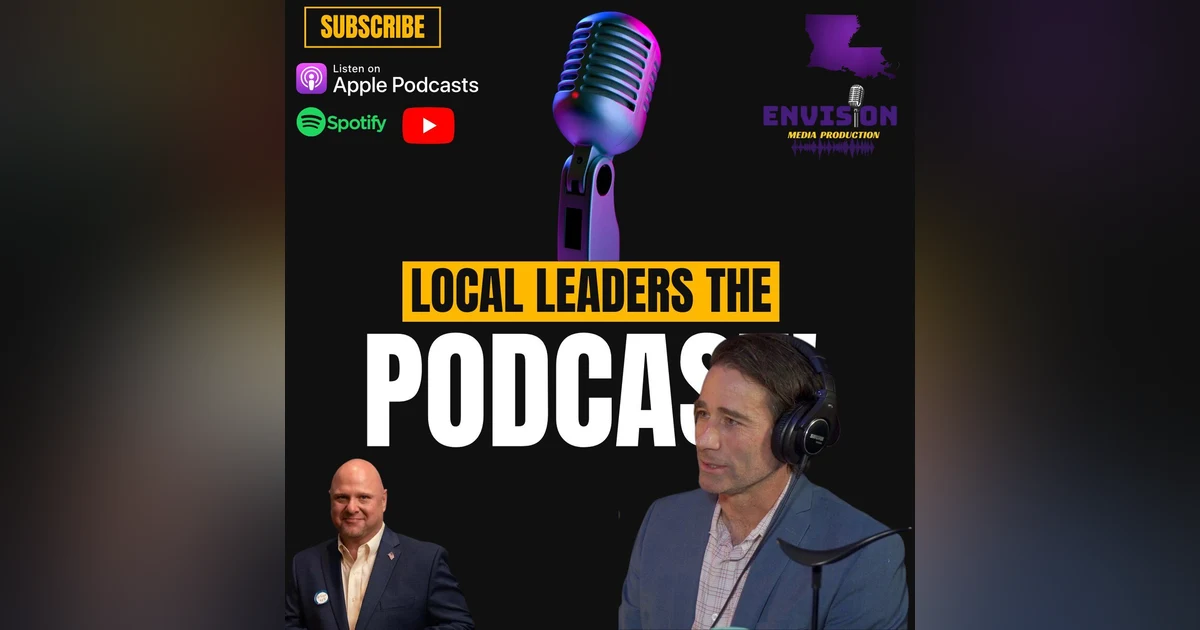

Congressman Garret Graves, representing Louisiana's 6th District, joins Local Leaders: The Podcast host Jim Chapman in an insightful rare longform interview.
Chapman goes in depth with the U.S. Congressman for nearly an hour starting with his...

 Apple Podcasts

 Castro

 RSS Feed
Congressman Garret Graves, representing Louisiana's 6th District, joins Local Leaders: The Podcast host Jim Chapman in an insightful rare longform interview.
Chapman goes in depth with the U.S. Congressman for nearly an hour starting with his decision to run for office in 2014, including the challenges Congressman Graves faced in the runoff battle against former Governor Edwin Edwards. The focus then shifts to the flood of 2016 that devestated much of Congressman Graves 6th district.
Graves goes into detail on the fight for funding, the fight to hold FEMA accountable for their “lackluster” response and the urgent need for proactive measures such as infrastructure improvements and disaster relief projects.
Congressman Graves unwavering commitment to advocating for aid and resources for rebuilding efforts underscores the power of dedicated leadership in times of adversity. Chapman points out Graves’ tireless efforts in securing funding for critical projects like the Comite Diversion project and highlights his dedication to Louisiana’s 6th district.
Congressman Graves, in his fifth term as Congressman, has played a primary role in securing funding and other resources for projects throughout Louisiana’s 6th district, especially in Livingston Parish, where Graves efforts assisted in bringing ROTC to Denham Springs High School, broadband access to underserved areas of the parish and a state of the art STEM center to Denham Springs. Built on the former site of Southside Elementary, which sustained heavy damage in the flood of 2016. Chapman and the Congressman discuss the impact these programs have had especially as it relates to the younger generation in the parish.
Congressman Graves discusses current projects where funding is already on the way, including a capital region program designed to assist in battling the Fentynal epidemic, crawfish farmers assistance programs as well the complete funding of the Comite Diversion project and discussed plans of flood prevention projects already in planning such as a 3rd outlet for the Amite River.
Graves expresses his frustration with the Duplication of Benefits battle in Washington and his commitment to see that the issues with disaster relief get resolved through common sense legislation and hard work.
This unique look at Garret Graves provides the viewer and/or listener with an insight that is rare in the current political landscape both locally and nationally, but with the transparency that Congressman Graves has always given his constituents through his Facebook Live sessions and his “Grub with Garret" lunches, you may have come to expect it from him.
Timestamps:
2:07 Congressional District Coverage
2:47 Starting the Congressional Career
4:59 Winning the Race Against Edwin Edwards
6:14 Fifth Consecutive Term in Congress
9:02 Personal Story of the 2016 Flood
11:52 Impact of a Congressional Message
12:33 Addressing FEMA's Response
19:07 Recognition of Community Support
23:58 Acknowledgment of Proactive Disaster Funding
25:29 Preparing for Floods Before They Hit
26:43 Advancing Proactive Flood Prevention Projects
30:11 Overcoming Obstacles for ROTC Program
31:39 Impact of ROTC on Youth Development
31:49 Battling the Fentanyl Crisis 34:03
The Graves-Carter Disaster Relief Fix
35:34 Challenges in Disaster Relief Funding
38:26 Addressing Inequities in Disaster Relief
42:03 Supporting Crawfish Farmers Amid Challenges
42:28 Congressman's Fun Facts
43:23 Congressman's Favorite Part of Service
45:27 Urging for Thoughtful Voting Considerations
You can stay up to date with what Congressman Graves is doing for Louisiana’s 6th district by:
Congressman Garret Graves on the web:
https://garretgraves.house.gov
To take part in and view his Facebook Live events: ...
0:00 Hi, this is Laurie Johnson with Hancock Whitney Bank and you're listening to local leaders the podcast. Visit localleadersthepodcast.com for previous episodes or for information on appearing on the show. Let's get into it folks, give you the rain breakdown, what we're looking at, what we're expecting and when the relief will come. Rounds of rain and showers and thunderstorms, the possibility of an additional five to eight inches of rain thrust. Coming in the work Friday morning, thinking you're going to have a normal day and not leaving until sometime the next week, that was something I wasn't imagining. I don't think we all understood how serious it was going to be. He really did not have a clear picture of how detrimental things were outside. It's just like one hard thunderstorm after another and it just never stopped.
0:43 People's house is flooding, they will loosen everything, so it's just like this stuff and then you have to dump someone there. I will lay down on the ground. Hey, everyone and welcome back to another edition of Local Leaders Thepodcast. And honestly, I feel like no introduction is even necessary for this guy sitting across from me. If you're from these parts, you probably already recognize him. But I do want to welcome him for his first appearance on Local Leaders Thepodcast.
1:23 He is the congressman for Louisiana's sixth district and he is Garrett Graves. So first welcome, sir, to Local Leaders. Hey, thank you very much. I appreciate the opportunity to join you today. Well, I am excited to have you on and I've been doing research on you and I'm like, I may know him better than he knows him. I don't know. We're going to find out. And we probably need to start out with telling people what pair of shoes you cover. I know it's about 800,000 people roughly. It is, yeah, just under. So we represent it's a dozen parishes and it's from North of Baton Rouge, so towns like Zachary and Baker have been central. But it comes all the way through East and West Baton Rouge.
2:05 It comes down to Iberville, Livingston, Ascension. It goes down the river, just kind of follows river. So Ascension Assumption, St. Charles, LaFouche, Terrebonne, St. Mary Parish, so just all the way down. So you got East and West from the top and East and West Baton Rouge, and Iberville all the way down and then ending down in Patterson and St. Mary Parish. Wow. That's a lot to keep up with. It is. But it is, you know, I got to tell you, it is such a great part of the state. It is. Some of the, you know, of course, Baton Rouge is awesome and Livingston Parish, you know, the East and West sides so different. But really cool. And then you get down in the Bay of Regions, I mean, just a whole other group of people.
2:46 So really enjoy the opportunity to represent the area. Absolutely. And let's start kind of at the beginning of your career in Congress. And it's March of 2014. You announced that you're going to run for the sixth congressional district. I believe at the time your, the incumbent was Bill Cassidy and he was waiting to the Senate. That's right. So I was working for the state of Louisiana. I'd got appointed to rebuild the levees after Hurricane Katrina restored the coastal wetlands about three years, two and a half years after the hurricane. So I was doing that and it looked born and raised in the capital region. I had done work in all of the river parishes, you know, that we represent St. John and St.
3:30 Charles assumption for years. And I knew everyone down in the Bay region as well, just from work that I'd done on the coastal issues on the levees. And so had people come up to me like, look, Cassidy is going to run for Senate. You want to run for seat. I mean, nobody has that connectivity from the capital region, the river region, the Bay region like you do. And I just, I didn't have any interest at all. I mean, it was, it was them. And I didn't even think about it for a second. The best analogy is a set of some I came up to and said, you should be an embalmer. You know, you know what? I, I, I, I, I, you know, I mean, like, but I just, I didn't even entertain it. And for nine months, I had just different groups of people that came up and urged me to do it. And I never said anything to my wife about it just because I'd never seriously thought about it.
4:14 But one night she and I were out and a group of people came to us and started making the pitch again. And I'm like, look, you know, thanks, guys, but, but not interested. And next morning we wake up and she turns over and she says, you know what, you need to run. My wife who had a teacher for decades hates politics. He hates hate politics. And I just looked at it and I'm like, okay, who are you? And she just said, you know what? Hear me out. She said, you know what? She just, you know what? Hear me out. She said, you know, listen to what they said. I thought about it. She said, you know, the issues in this region, you know, the people in the region. And you know how to get things done. And she said, you know what? I just, I don't like politics, but I think you're the person to do it. And that was the first time that I ever let myself think about it and took about two or three months and ultimately jumped in and it was surreal.
4:58 I can only imagine and you end up winning that race in a runoff against another Louisiana political individual people may have heard of named Edwin Edwards. Yes. How was that? It was surreal. I mean, he was governor when we were kids, right? Yes. And so he was a myth or a legend then. Yeah. And so, you know, at one point, I think we had up to 17 people in the race. I mean, everybody in their brother were in. So huge, huge group of people, but then we got to the runoff with Edwin Edwards and I and I got so scared. I remember we came up to the debate. We were going to have a debate and we had it right at force Grove here in denim and I sat out in the parking lot.
5:45 And I was afraid to go in because I just, my nerves, I was so scared. I mean, again, myth or a legend, we were kids and it's just going to be the two of us. And finally, campaign managers like, all right, it started three minutes ago. No one else is going to debate him than you. So you got to, but it was, it was surreal and ended up, ended up winning. Yeah. Yeah, really in winning, you know, 62 and some change per cent. So definitely a vast majority fast forward to today, your fifth consecutive term in Congress. Yeah. Yeah. It, it, it, it's certainly flown by.
6:25 Yeah. I thought I'd, I'd do this for, for this period of time, but you know, it's one of those things. I think when you, when you feel like you can contribute more, when you feel like you still got some, some oomplaffed and, and be able to get some things done, looking at seniority and does it make sense to stay or does it make sense to let somebody else come in? But look at this point in January of next year, if we play our cards right, January 2025, I can be chair of the Transportation and Infrastructure Committee. Global jurisdiction over roads, bridges, traffic, ports, waterways, transit, airports, core engineers, which of course is co meet project and flood control, hurricane protection, coastal restoration, full jurisdiction over FEMA disasters.
7:06 You know, I mean, so you look at that and you're like, gosh, I feel like leaving would be a disservice to the people that we represent because our ability to force change and reform in, in organizations like the core of engineers and FEMA alone, I think could just be life-changing in a community like this. A friend that we share named McEw David, this is a story involving him. So I hope you don't get mad that I'm sharing it and he shouldn't. But me and McEw were sitting around talking one day and this was several years ago and we're talking about term limits. And I was kind of one of them people, I was always back and forth. I'm like, yeah, we need him. No, we don't. Yeah, we need him. And he said, Jim, I'm going to tell you, you know, my thought on that. And he said, if you have term limits, you'll lose like a grave just based off of term limits.
7:52 And I said, you're right, screw your term limits. We don't want term limits. No more. Yeah, because, you know, and we're going to get into the impact that not only you've had on the Livingston Parish community, but on me personally tested, not even a good enough word to describe what happened a year and a half after you were in office. Of course, we're talking about 2016, right? Yeah, it was, I mean, that was certainly some baptism by far. We had somewhere around 60 to 70% of the people that we represented were dealing with probably the worst flood event, worst disaster they'd ever experienced.
8:37 And driving through miles and miles of communities watching and seeing everything people owned, family heirlooms, scrapbooks, picture albums, just out there on the curb destroyed. And all the people you can see it in their face, I mean, just, just completely deflated. That was a really, really challenging time for this community. It really was. And for those that may still not be familiar and you know, I do have listeners in other areas, it was seven trillion gallons of water, 31 inches of rain in just a couple of days, Val. In my effect, we're, we're recording right now completely under water.
9:20 I want to spend a little time on this because I feel it's an important aspect of not only who you are, but your leadership ability. And that's, I want to share this quick personal story. And like some of the others, I've flooded, you know, with a million other people at same like at the time, my girls were 11, twin girls, my son was 13. And when the rain stopped, we had lost every single thing we owned, including our vehicles. With the exception of clothes we had on, we had nothing, not even food. And we were just one of thousands. My father-in-law was bed-redden, had Alzheimer's. He was eventually airlifted off of highway 16 in South Range about three days after, after we were out there in the middle of the way with thousands of other people.
10:09 Now I'm 41 at this time, Congressman, the man of the house, right? I never even showed a henna stress to my family or anybody around me, but inside I felt it. And when the dust settled and we got to gutting our home, we were blessed enough to purchase a camper from someone, my wife name. I remember it was yesterday. I walked into that camper, hard day, hot, you're gutting. And this comes on the TV, this commercial spot from you. And if you'll allow me, I'd like to just read what you said in it because it had a major effect on me. And the title of that commercial spot was Unbroken and it said, "Historical flooding shook our spirit.
10:54 Devastated our homes, our businesses, and put tears in our eyes." But it also brought us closer together. Neighbors helping neighbors like the Cajun Navy, our law enforcement, firefighters, teachers, our churches and countless others, many with flooded homes themselves, but working around the clock to help entire communities banding together because in Louisiana, there are no strangers when one of us is in need. We're proven every day that our resilience and passion will be the key to our recovery. I'm Congressman Graves. I know that you're tired and worried, but I've seen your determination and hard work and know that standing shoulder to shoulder, we will rebuild. We're telling our story to our nation's leaders in Washington and every day working to get the resources needed to recover.
11:41 No stone will be left unturned to fix the problems and make sure this never happens again. We will recover because our spirit is unbroken. That's what I needed to hear right then at that time because it was tough as you know, as you saw. Then I saw you in front of Congress and it was a oversight committee meeting with FEMA officials on their lack of response early on and you had the mayor's, your laundry was there and the mayor Walker, the mayor's central and you stood up and for seven minutes, you, what we would say in the South, kind of told them about themselves and it was amazing.
12:31 So we're going to insert that clip real quick. I think everybody needs to hear this because Congressman Graves, I think it's important for people to remember how tough that was on all of us and who was there for us. Chairman, I want to thank you for hosting this hearing. Congressman Duckworth, you as well. Thank you, Chairman Chafas. I appreciate you all bringing attention to this issue. Look, you're aware of the statistics. The last time I talked to FEMA, this flood event has received one half national media attention that the South Carolina floods received and it, well, it's never a good idea, I think to compare disasters because there's such personal tragedy in them.
13:13 It is amazing that there has been such a lack of urgency and knowledge and understanding of what's happened. This is a one thousand year flood event, a one thousand year flood event. This is something that I'm going to rip a line from Mayor Shelton. This event could happen in any city. And I understand that folks say, you know what, it's not in my state, I don't care. It's not affecting my constituents. It does because what happens here, the president, allowing laxatives, allowative, allowing lack of priority has a profound effect on what happens to our constituents, but when you have a disaster, whether it's an earthquake, an avalanche, a volcano, a flood, a hurricane, no matter what it is, a terrorist attack.
13:55 It's going to have a profound effect because if you let things slide, if you let folks take a laxie, days go approach here, it's going to be the same thing in your state. You know, try to communicate with other members of Congress and compare this disaster. Chairman Chafes just talked about the fact that it was 31 inches of rain and comparing it to other places. The national American rainfall, the average rainfall for this country is less than that and we got it in 36 hours. Put that in perspective, 7 trillion gallons of water, 7 trillion. The reality is this, the Stafford Act is entirely insufficient to respond to this disaster. It is entirely insufficient. You can play tens of thousands of times over where people in South Louisiana, or upside down in their mortgage, their jobs are underwater literally.
14:45 Their cars have flooded out, they've lost their clothes, they have nothing. And we have got to increase the urgency of the response here. You know, this has been an amazing community watching what's happened in South Louisiana. Everybody at home talks about the cage and navy. We didn't sit around and wait for people to come rescue us. We got together and rescued our own people. We did it. People trashing their boats, putting their lives on the line and their safety at risk to go rescue one another. We had the cage and shelter set up where people opened up their homes, businesses, churches and everything. To shelter people, cage and chefs popped out pulling their barbecue grills out, cooking for tens of thousands of people in the cage and army got together.
15:26 In the cage and army did an amazing job going through and stripping and gutting tens of thousands of homes in South Louisiana. Let me be clear. This wasn't because anybody directed them to do it. It wasn't because they were paid to do it. They did it because that's what our community is about. But now we're in this position where the volunteerism, the generosity, the selflessness, it can't get us any further. Now we're to the point where we actually need help. The housing unit progress is absolutely unacceptable. The fact that NOAA can come out in two weeks and say that this is attributable to climate change, fascinating to me. I couldn't even imagine that scientific calculation. This is attributable to climate change, but they can't tell John Doe on whether he's going to get a house or not, whether he's going to have a place to live, still living in their moldy home, still living in a tent, still living in a car.
16:16 It is amazing what can happen when you prioritize things. You have a political agenda you can make something happen. And talking about urgency again, in two weeks NOAA can come out and do complex calculations to determine this is a result of climate change. Yet in 30 years, the United States Army Corps of Engineers can't deliver the Komei Diversion Project that was authorized by this Congress in 1986. I don't know how many times we're going to continue this stupidity of spending billions of dollars after a storm instead of millions before making our communities more resilient. It is absolutely absurd and this has a profound impact on the individual lives of many, many folks in South Louisiana.
17:00 The parish that two of these mayors here represent Livingston Paras. Initial estimates are that 86% of the homes in 91% of the businesses were flooded. Think about that for just a minute. 86% of the homes in 91% of the businesses. It is devastated communities. It is absolutely devastated them. It's crippled them. Mr. Robinson, I appreciate you being here and we've worked together for a long time. And again, I really do appreciate you being here. This is projected to be the fourth most costly flood event in the United States history. I'm really scratching my head as to why Mr. Fuget is not here today.
17:41 I don't understand that. I don't understand why he is not here. This is a huge event. Stafford Act as I said before. We're blowing the side boards off of Stafford Act. The White House needs to send an emergency supplemental request, including the unmet needs package of CDBG and other things to help address this, to help us recover. We need to have a more robust flood protection projects funded like Comit, Ameet, Parish flood control projects and others to help lower the base flood elevation in this region. These things need to happen right now. I'll let me yield back. Mr. Chairman, very quickly note that we're joined by a number of folks that have been down there in the trenches through this disaster. In addition to this theme panel, the Governor and the Mayor's Webber Lieutenant Governor, Billy Nungesser.
18:24 We have our Commissioner of Agriculture Mike Strain, State Senator Chairman of the Homeland Security Committee, Boate White, a number of other leaders from the state of Louisiana and folks that have been in the trenches and tireless in their efforts to help recover. Looking forward to working with my friend, Congressman Richmond, over there on a full recovery package. Thank you, you're back. Eight years. I've been waiting to tell you thank you for doing that. I've told Mayor George Landry, 100 times, and he laughs every time. But thank you, because not only to me, but to so many people, we would not have made it, not have had it not been for you. This town would not have survived. That's just the sheer facts of it.
19:05 Look, I appreciate it. And that's my job, right? That's my job. That's what I'm supposed to do, too. I want to put a little bit of perspective for folks that maybe aren't from here and help folks understand the background there and which all that happened. You remember just weeks before the 2016 flood, we actually had the police, where we had officers. Of course, the shooting was in Badruse, we had officers who were from denim, from this community that didn't make it. And that event ripped the community apart and then started bringing people together, but you could tell. I mean, folks were really on edge and it was a really weird time.
19:46 Then we had the 2016 flood. And the KJNavy, you know, sort of existed from Katrina, as you recall, but KJNavy on steroids was created in the 2016 flood. This was not a hurricane. It was not an announced storm. You didn't have CNN and Fox and everybody else with the little logos going about hurricane, whatever storm, whatever. This thing was just boom. It was an afternoon. It was a night. And as you indicated, the extraordinary volume of water, but also by some measure, this was a 1,000 year storm. And so you had people whose homes were flooded that were still out there and boats collecting others and rescuing and everything else.
20:27 It was awesome to watch people come together. Now, when you have a hurricane or other events that are getting the national news or on the front page of the paper, it's easier to get assistance from Washington. In this event, no one knew this had happened, no one. And so we're sitting here trying to advocate and educate and Congress. And everybody's like, what storm? What are you talking about? And so we finally got a plane. We flew members of Congress down here. We said, we are going to make you see this and we brought them down here. And that is where the game changed. These people were with us flying over miles and miles driving through miles and miles and they went back and they were like, no, no, no, this is serious stuff. And so then our advocates grew and we were able to start getting assistance and start getting recovery dollars and everything else.
21:12 But let me say it again, the community is what was amazing. The way that people came together, the way that, as I said in the commercial, in the video, which by the way, we were out gutting a home. The crew came over and said, hey, we want to cut a commercial. And I'm like, man, I've got, you know, wood in my hair and-- >> She rocked her. >> So can wet and what it is like, you know what? Let's just do it. And so we just kind of just did it. But look, the community is what was awesome. You can secure dollars, you can get programs, you can federal agencies. But if you don't have the community like that, it's not going to work. And the community was absolutely amazing.
21:53 Complete strangers going in as you know, mucking and gutting other people's homes. It was just phenomenal. And these people would sit there just completely looking helpless and hopeless. And then this group of folks would come walking up and I mean, just lifting spirits and awesome watching the community. >> It really was. And I'll just leave that thought with this. There's a long story to it. But three days later, we managed to get out and get-- we hit the interstate and didn't stop till slide L, you know? And I remember us trying to get down, Jubin, a lady stopped me and she said, you can't go down Jubin in that. You know, I was in a truck that was actually her father and laws, my wife's father.
22:36 And I said, I got to get out of here. I got three kids and people were getting hungry. It was hot. And she said, you're taking a risk. It's still flooded really bad. Well, I went down, Jubin. I got behind an 18 wheeler and that 18 wheeler made a wake just enough to where I could see the road because when I got on Jubin, it was licking up almost on the windows of the truck. Oh, my God. There were swamped cars with, I'll never forget passing a woman in a baby on top of a car. And you know, us as men, we want to stop and help. But if I stop, my whole family swamped. So I kept going, my wife starts crying. And I thought she was crying because she was scared. I turned in and said, I got this.
23:17 You know, always driving, you know, four foot of water. And she kind of hits me and she says, not you. Look at that. And it was people launching boats. And my wife said, that's our people. And it moved her to tears. And me as well. And it was something that if you weren't there and you didn't see it, you'll never fully grasp it. Yeah. But you were for me and so many others in that event, the voice of Louisiana and someone that I could rely on for information because you couldn't hardly get it.
23:59 And I will always be thankful for you and forever in your debt for what you've done. And I know you say that's your job, but it could have been the wrong person at the wrong time. And I'm thankful every day. It was you. So thank you for all of that. Proactivity versus reactivity seems like it can be a problem sometimes in Washington, especially with this flood, one of the things that you pushed as far as getting funding, not only for this flood, but disasters is in general. Is hey, let's be proactive and not reactive. Let's not wait till something happens to figure out how we're going to pay for it. Number one, being a good financial steward in the United States treasury, you can look at all sorts of reports, calculations, estimates, being proactive is an extraordinary cost saver, extraordinary cost saver.
24:49 You're going to spend millions before or you're going to spend billions after just a quick ballpark estimate, 2016 flood, just sort of in this region alone, we ended up appropriating somewhere around $20 billion all in. And you know, just kind of putting things in perspective. You had a project north of us, the co meet diversion project. The project was sort of originated in the early 1980s. When I came to Congress, it had been stalled, thing had moved. I will make note that before the 2016 flood in January of 2015, the very first month I started, we secured, I think it was $7 million off a project that had been completely stalled, then a few months later we got an additional $10 million.
25:30 And so we started getting that thing going again even before the flood. And then after the flood, you know, that's what we brought up just a guys no more piece mail. We're going to do this thing. And so we came in and we fully funded the co meet project. We fully funded this other project called five by use. We got money for livingston parish to come in and do clearing, snagging, dredging removal of debris and vegetation in about four to 500 miles of rivers, by use canals and ditches to help get flood water, evacuate flood water faster. In fact, they've done it. They've done it twice now. They've done almost over 900 miles of this stuff because they've done the four to 500 twice. That's huge. It is.
26:11 And most people don't realize that this entire base, it everywhere from St. Francisville on these sort of rivers from St. Francisville down, it all drains into Lake Marpo. It doesn't drain into the Mississippi River. And so we now with the co meet diversion project that is a billion dollar project, that project is going to connect to the Mississippi River, pulling water off the co meet. We funded a new project in the French settlement port Vincent area called the highway 22 spillway. So right there off highway 22, there's going to be sort of a southwest, a new outlet off the river draining into the Marpo Swamp high, so you have diversion canal, blind river, and this third one. So a lot of stuff going on now to really be proactive, to not get us back to where we were in 2016, but to truly bring us next level.
26:58 Now the bad thing is that we don't need to go build projects from the 80s and say we're done, like the co meet project. So we've brought, you know, the good news is we brought some new projects to the table and secured in addition to $1.2 billion on top of the other billions for old projects. The 1.2 is exclusively for sort of those next level projects, the perspective, the proactive projects, like the highway 22 spillway. So we're really excited about all the progress that's been made, but we got to get these projects finished. Yeah, I agree, and you've really done a good job with the projects that you brought not only to the Louisiana as a whole, but Livingston Parish, the broadband, the broadband for all, if you will, where we had underserved aspects of our community that COVID hit and they couldn't get on broadband if they wanted to to get a school of these kids.
27:54 There just wasn't access. That's amazing. And that reddo community was one of the first ones that reached out to us when we started in 2015, came to us and started talking just about it. And so we started looking around and I don't remember the exact number, but I think we ended up finding it was either upper 20s or maybe even high 30s on the number of different broadband programs are out there. They had ones for schools, libraries, banks, healthcare. They had ones for rural areas. I mean, it was unbelievable, the number of programs. And so we were saying, look at this, it said, who is coordinating all of this? Who's making sure that the bank is not putting one on a fiber line on top of the one that the school is doing?
28:35 Who's looking? There was no map. There was no map. There was no coordination. There was no nothing. One of the first things we did is we pulled in all of the different entities, again, from the healthcare providers to the banks, to the schools, to the libraries, to the communications companies. We started doing meetings in the parish and said, look, if there's not a map, if there's not a coordinated plan, let's sit down and make one. And to John Bell, Edwards Credit, he appointed later a sort of a broadband czar who came in and started mapping the whole state. But ultimately, we did the right thing. We got money to the communities that didn't have the right types of connections or didn't have any connection had to use satellite. And been able to make some really good progress.
29:17 Yeah. I agree. But this parish in particular was well underserved in a lot of areas and we did get some money for that. I also wanted to mention, let's talk about ROTC. One of my favorite programs, y'all, inexistence, probably, I think are young people or where we need to put a lot of investment. And it's hard not to learn structure from ROTC. We did not have a program at Denham Springs High School. Our neighbors and Walker did, Buddy Mancy, who was the school board president at that time, had applied to get the ROTC program. He was denied and he knew exactly who to call to see if he could get some resolution.
29:58 Tell me about that. Yeah. That was a really cool experience because we talked a little while ago about this community. You talked about how your wife tiered up because of all the community members just volunteering and going out there and doing rescues and everything. That's our community. And so when Buddy Mancy initially reached out to the army and said, hey, we want a ROTC program here, a ROTC, a junior ROTC program here, they said, look, we're not doing expansions right now. We're not going to do it anymore. It's not going to make sense. We're not going to have enough students mean every reason to say no. So we reached out and started talking to them and they were giving us the same line. We're not going to do expansion. There's just not the appetite for these types of programs anymore.
30:40 And we said, look, I hear you. We don't know our community. You don't know our community. And they just, they said, no, at every turn. And we kept going back and just saying, you know what? I just want you to trust us. Just we know our community better than you do. I want you to trust us. And I don't remember the exact number, but I believe when we finally convinced them to do it, I think that they told us that it was the highest number of applications for any first year junior ROTC program in the country. Like it was just, they were dumbfounded and we were like, look, this is us. Like we bleed red, white and blue. We love our country and love our service members and they were blown away.
31:22 And I mean, they were just like, you were right. This is amazing. And so buddy knew what he was doing. The denim spring high school is a fantastic school and just a great community and it's awesome how patriotic that school in this community is. It really is very, very proud of my son and daughters participated in ROTC and it wasn't even in my urging. I didn't have to urge them. They just did it. And learned a lot. Let's talk about fentanyl real quick and you've got some help coming for East Baton Rouge pair Sheriff's office in that fight. fentanyl is killing a lot of people. Yeah, it's actually for Sheriff Art as well. It's going to be a capital region program.
32:03 Very good. Good luck. After the 2016 flood, you don't think about all these things but we started seeing suicides go up. We started seeing mental health problems happening. And the thing that really got me is we started having kids put in foster care and Sheriff Art and others can tell you, I mean, the number just spiked. And at first I'm like, what is going on? This is crazy. And we got everybody together. The law enforcement and got the child and family services folks and just everybody together and started sitting down trying to talk through what was happening. And they said, look, this is an effect of the flood.
32:43 That all these people, you know, the stress, the despair ended up turning to drugs. fentanyl became so readily available. And so then they couldn't keep the kids because they were addicted and they were high or passed out or whatever all the time. And so we had a foster care crisis in Livingston Parish. And so we started working on that and then you start talking to the experts, the law enforcement others and you realize the source of it. And of course, this opens up in border, which is crazy is just allowing for these massive volumes of fentanyl to come across. And as somebody said to the day, one pill will kill. And it is such a small amount. So we've gotten together with Shere Gokcho and East Baton Rouge with Sheref Weber and Ascension Parish and Sheref Ard here in Livingston and doing a fentanyl and a violent crime program where they are going to be focusing on, because a lot of the violent crime is tied back to the drugs and they're going to be focusing on millions of dollars and they're going to be putting together technology.
33:47 They're going to be working on a specific group of folks that are really going to be focusing on this issue, trying to stop this fentanyl crisis, trying to stop the supplies from getting in, getting people help that are addicted and really trying to turn the corner on this awful, awful epidemic we're seeing. Yeah, it really is awful and I'm glad to see our congressmen out there not only recognizing that, but taking some steps in order to do what we can do to rectify it. The Graves' quarterfix. Let's talk about that real quick. I find that very interesting, that is a deal for the benefits for disaster victims. A lot of people had some issues with those DOBs I guess.
34:35 You get so frustrated, you've got all these federal agencies and they've got their Washington DC based, rigid rules and programs and so one of the things, all everybody is trying to do. They're trying to help. And so in the community, so you have all these agencies come in and people are like, look, I don't know where to start. Everything I own is flooded and gone. My cars, my clothes, my house, sounds very similar to what you experienced. And so like, look, I don't want a handout, but I need to hand up right now. And so you have a loan program, did a small business administration that loans to individuals not just businesses, to families that are in need, you're a FEMA that does a grant program.
35:17 And then ultimately, as part of all the work that we did in addition to the billions and billions we've got for flood control and some of the reactive and proactive projects there, we also got $1.7 billion in grant funding for people like you that flooded and need to rebuild your home. And so here's the catch. I'll give you the scenario. You and I, let's say that we live across the street from one another, our homes are identical. We got the same height of water in the house. It did the exact same dollars and damage. We make the same amount of money. We have the same kids, everything identical. And let's say that you were proactive and said, gosh, I've got to get back in my community.
35:58 And so you took that loan from the small business administration and you started swinging a hammer and you went down to, you know, home stands, home depot, whatever. You can tell a mustard, this is exactly how that happened. And you got everything you needed. And again, you mucked and gutted and you started rebuilding your house. And so that's what you did. Me, I'm across the street from you. And I said, you know what? I'm going to kick back at the, you know, holiday and or whatever, wherever famous, providing a hotel room for me. And I'm just going to kick back and stay here because I get free breakfast every morning. They come in and they clean my room and change my sheets and give me new towels. And I'm just going to kick back. I'm not, I don't see the urgency that you say. And so I sit in the hotel room.
36:39 Well, over months, you can imagine I'm costing the federal government tens of thousands of dollars. In some cases, it can go into six figures. You boom, you stayed with a friend in slight help. You're back, you know, again, swinging hammers and you're, you're in your home. Well, then it took us one month after the 2016 flood, just started getting the grant funding, the 1.7 billion. It took the state months and months to get the program rolling. So let's say that six months later, the grants become available. I wake up one morning and say, maybe I'll, maybe I'll apply for the grant now. So I go to apply for the grant, I get the grant, okay? So I have a grant, a grant, a free money to pay that back.
37:22 You have a loan that you have to pay back. I just cost taxpayers and again, I'm going to make numbers up. I cost back taxpayers $100,000 in a hotel room. I cost taxpayers, you know, all the staff time and everything else. All you did was apply for a loan and you started swinging hammers yourself. So I'm in major liability to taxpayers because I got the grant and I got the free hotel room. You effectively are nothing for no liability to taxpayers. You then say, oh, they're grants available. I'm going to apply for a grant. The federal policy was is that if you got a loan, you could not get a grant because they said that was double recovery.
38:02 Now, obviously that doesn't pass the common sense. For the one that should be rewarded for what you did, I should be penalized for what I did in my hypothetical scenario. I want to be clear, hypothetical scenario. Yet under this policy, you were the one that was penalized. For getting back in your community faster, for helping reestablish property values and taxes and an economy that can recover. And so as said, this is crazy. So we started working initially with the Obama administration trying to get them reversed, the policy that didn't pass the common sense test, couldn't get them to do it. So we finally changed the law. So we changed the law and I'm thinking this is awesome, where I'm all excited. It took them one year, one year to write the rules.
38:43 The bureaucrats didn't want to do it. So they finally write the rules. We start getting checks out to people. We finally got about 60% of the people that got assistance. And we find, what do you mean 60% of everybody needs it? We pushed them a little more. We got up to 80, maybe, maybe closer to 90% of the people. But they still, they came in and they invented this income threshold. And they said, anybody that makes over this much money, you are not getting anything, not a sliding scale, you're not getting anything. And the number, it depends on where you are in the community, but what, not a high number. I mean, it was like 60,000, I think, and some combined income in some areas. And so we fought with them on that and we got a little bit more progress.
39:24 But ultimately, that last 10 to 20% of people, they've been stuck of the $1.7 billion we got, the $700 million of it was actually given to homeowners, the people that we intended all of it for. And here we are, here we are approaching eight years later. It's unforgettable. So I put provisions in different bills through the House of Representatives over and over again to fix this. And every time it gets in the Senate and it will get shut down. So we worked out this really good solution. We think we worked out everybody's concern, House Senate, Republican Democrat worked it all out. And in this last negotiation, it got Jettisoned on Friday, on Friday. And negotiations were to send it to the White House.
40:05 And so I'm really aggravated about this because that last 10 to 20% of people, they deserve to be helped. And having only $700 million of $1.7 billion given to homeowners for assistance after eight years, it's not okay. So we're still, I'm committed to fixing this though. Yeah. It's the story of many, and it is outrageous. Let's talk about crawfish farmers real quick. And look, they had a tough, tough year y'all last year, drought record heat, but you got some help for them. Yeah, yeah, we have. So look, crawfish is a difficult one because you go to somebody in Michigan or you go to somebody in North Dakota, Iowa and said, hey, look, we need help for crawfish.
40:50 Like what? So the shrimpers were having problems. We were able to do some things for them. Somebody like shrimp and we're able to get the USDA to buy a bunch of shrimp for food programs and stuff. Crawfish has been a little bit more difficult. So one, the crawfish farmers have been challenged because of the drought, but also the wild crawfish has been harmed as well because of the drought and the low water on the Chaffel-I River, for example. And so we have been working both with the United States Department of Agriculture to try and address some of the farm crawfish is usually harvested with rice. It's usually, it's a complimentary crop to rice. And so for those, we've been working with the USDA to get assistance there.
41:31 And then for the wild ones, it's a unique species because you don't have a lot of fresh water commercially caught seafood. And so, National Marine Fisheries Service and NOAA, they do wild seafood assistance programs, disaster programs, but they don't do fresh water. So we had to get USDA involved for the, for the Farmed Crawfish, we have to get NOAA involved for the wild crawfish and trying to offer assistance to both of them so we can keep crawfish bowls going for generations to come. Absolutely, absolutely. And I know they appreciate it. I appreciate it. And everybody around here that eats crawfish appreciates it. We saw, all I know is, what, they were 12 and 15 bucks a pound for a little while.
42:13 That's it. People like, what? That hurts. Yeah, that hurts. They're coming down. I think, I think they're around, my wife said they were like seven bucks boiled the other day. And it's weird when you think that's cheap, but I'm like, why not in bad? So we do a little fun fact segment on our, on our episodes of Local Leaders and it's just some little fun things that people get to know your congressman, if you will. So have three questions for you. The first is, what did you want to be when you were 12 years old? Wow. When I was 12, you know, I'd say probably a police officer when I was 12.
42:57 I just always had to still do so much respect for those folks and just even now, he and just, just hold them in such high regard for what they do and sacrifice for them and their families. If you could have any superpower, what would you pick? I think fly. Yeah, me, Apple flyer. I love, I love being up and I spent a lot of time hiking and I just getting up above things and looking down, I love it. Very good. And what would you say has been your favorite part of being a US congressman for the six districts, that's what I thought? Yeah. So hands down. So look, you probably run across people all the time that explains something to you like duplication of benefits or a veteran who is not being treated properly by the veterans affairs or the IRS has improperly charged someone taxes and you're looking at that and you just say, you know what, that's wrong.
43:51 And you just, you get frustrated and you get frustrated with the government. My favorite part is actually being able to help people. And I, you know, when people have those problems, when you see these crazy federal policies that don't pass the common sense test to come and say, you know what, we're going to do a bill and we're going to fix that. And I'll give you one quick example. I will never forget. After 2016 flood, you can imagine all of these people calling and saying, hey, I need help, I need help. And under a law that was written in 1974, we can help, but we need someone to sign a piece of paper, print out a piece of paper, explain, I'll sign it and then send it to us in order for us to help them. It's a privacy act thing. And so you can imagine them like, yeah, all you need to do is go to our website, click on this link, print out that form and these people like, hey, moron.
44:35 Remember when I told you my house was under eight feet of water? That would be my computer, my printer, you know, you're just like, ah, he's like, how is it that I can order new t-shirts off of Amazon, but I can't help these people off of a phone or some type of mobile device. This doesn't make sense. And so, you know, it's a perfect example. Got together with the Congressman from Massachusetts. We did a bipartisan bill, by camera bill signed into the law in today. You can use your phone, you know, you can use your phone to get assistance. If you've lost your passport and you're overseas, how are you going to sign a piece of paper and send it over and out stuff? So it's awesome. Just being able to step in and say, you know what, we're going to fix that. I love it. I love it. Yeah. Well, you're doing a great job.
45:16 We appreciate it. Please keep, keep fighting. I know you will, but there's a lot of people out there that could not imagine the six district without you, quite frankly. All right. Look, if I even give it just 30 seconds. Yeah. Look, one thing, I really appreciate the opportunity to join you today. It's no secret that in Washington, things are chaotic and it's a complete mess. I just, I want to urge everybody who's listening no matter where you are. When you're looking to determine who to vote for, just really look and see what these people have done. You know, we talked about a lot of things. We've actually been able to accomplish by working together with a great group of people in this community.
45:56 And the people that I think are often voted for are the people that are loudest, that have the viral, you know, video or whatever else versus the people that are actually getting points on the board. People that are actually solving problems. And I'm really concerned about the direction of the country and the Congress right now. If we don't fix this and bring some more functionality back to the Congress, I'm incredibly concerned about where this country goes, the additional power, lack of checks and balances for the White House, for the judicial and others. And I think it's absolutely critical as we move forward that you think about your representative as a salesperson, you know, what do they sell in? What progress are they making? How are they advancing? My company, our community, our family, really, really critical.
46:37 100% couldn't agree more. Thank you for coming on. You had a good time. Yeah, this was awesome. Very good. Very good. Thank you to all your listeners out there. We're approaching one million downloads on YouTube. And look, we couldn't do it without each and every one of you. We're totally blessed to do what we do. And until next time, I'm Jim Chapman, reminding you, love your community, support local business and keep leading. Thank you very much. The epic floods in Southern Louisiana, expect to get worse today. There are, you know, they're struggling, their homes are flooded. There's still a lot of water in that area. Historic flooding. Shook our spirit, devastated our homes and businesses, and put tears in our eyes.
47:21 But it also brought us together. Neighbors helping neighbors, like the Cajun Navy, our law enforcement, firefighters, teachers, our churches, and countless others. Many with flooded homes themselves, but working around the clock to help. Entire communities band together. Because in Louisiana, there are no strangers when one of us is in need. We're proving every day that our resilience and passion will be the key to our recovery. I'm Congressman Garrett Graves. I know that you're tired and worried, but I've seen your determination in hard work.
48:03 And know that standing shoulder to shoulder, we will rebuild. We're telling our story to our nation's leaders in Washington and every day working to get the resources needed to recover. No stone will be left unturned to fix the problems and make sure this never happens again. We will recover because our spirit is unbroken. [MUSIC]